
Entering loans, Interest, and loan payments
In this article
A loan is money your business receives and will need to repay to the lender. When you set up a loan in Upmetrics, you can enter details such as the loan amount, term, interest rate, and repayment schedule. Upmetrics will use these assumptions to calculate the applicable interest and repayments in your financial forecast.
You can describe your loan in plain text and let Upmetrics draft the funding source for you. If you prefer, you can also create the loan manually and enter all the assumptions yourself.
NOTE: Don't enter your loan repayments as a separate expense. Enter the loan under the Funding section so the principal and interest are reflected correctly in your financial statements.
Adding a New Loan
Use this method for a loan your business expects to receive during the forecast period.
- 1
-
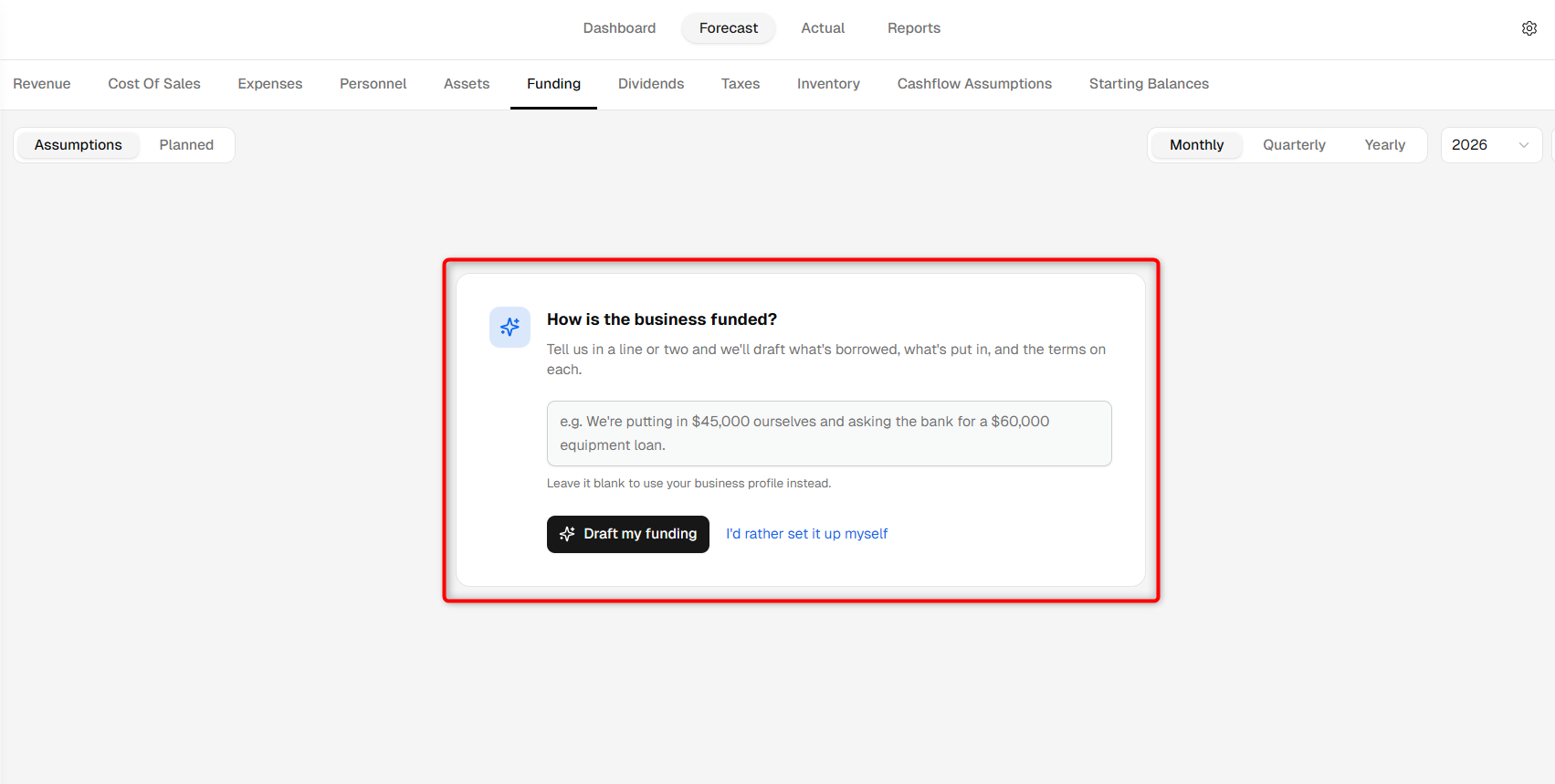
Under the Forecast tab of the Finance Forecasting module, click on the Funding tab.
You will see a setup window where you can describe how your business is being funded.
- 2
-
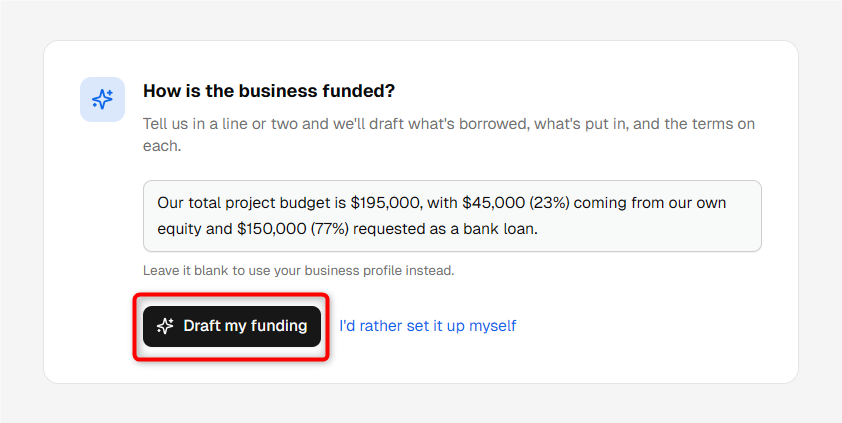
Enter your loan details in plain text. You can include information such as the amount you plan to borrow, the lender, loan term, interest rate, and expected repayment terms.
Click on Draft my funding to continue.
- 3
-
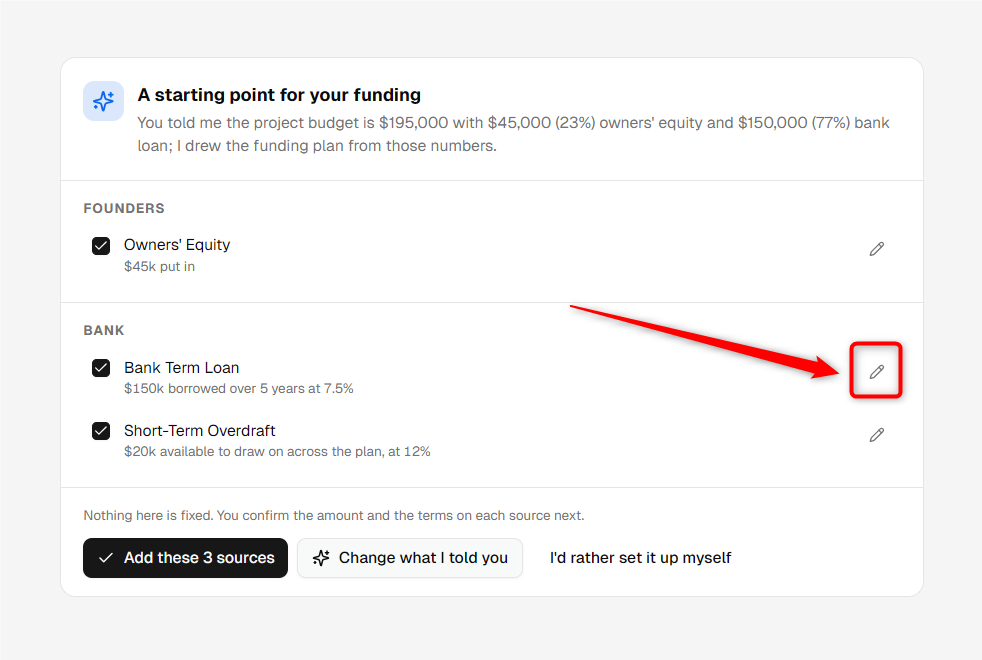
Upmetrics will organize the information and suggest the appropriate funding source for your forecast.
Review the suggested loan and its starting assumptions. If you need to make changes, click on the Edit icon beside the funding source.
- 4
-
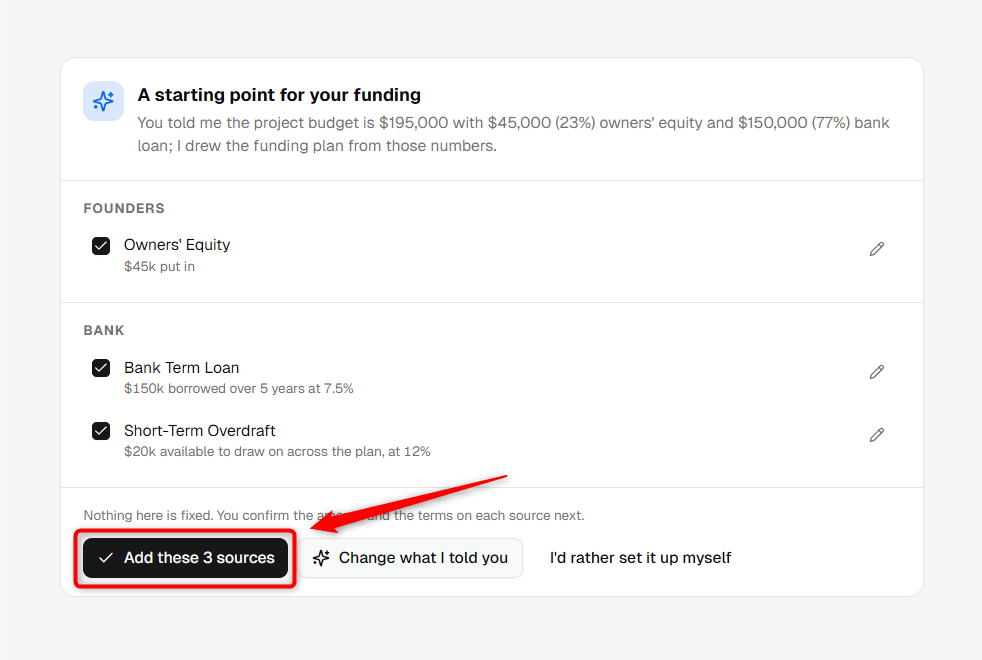
Once the details look correct, click on Add these sources.
The loan will be added to the Funding section of your forecast, where you can review or update its assumptions whenever needed.
TIP: Include details such as the loan amount, term, interest rate, expected receiving date, and repayment terms in your description. Providing more information helps Upmetrics create a better starting point for your loan.
Setting up a Loan manually
If you prefer to enter the loan details yourself instead of using the AI-assisted setup, you can create the funding group and loan source manually.
- 1
-
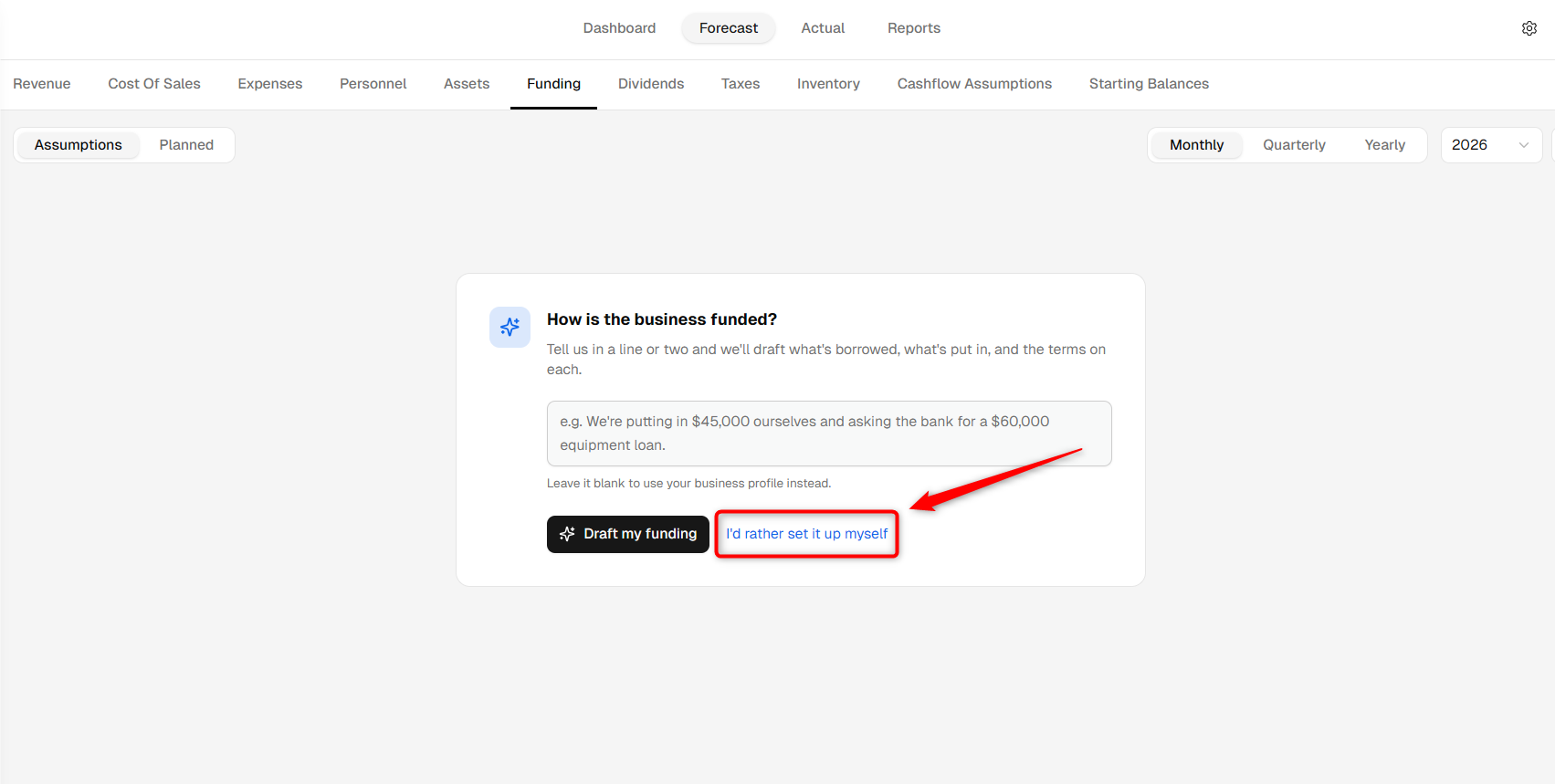
On the initial funding setup window, click on I'd rather set it up myself.
- 2
-
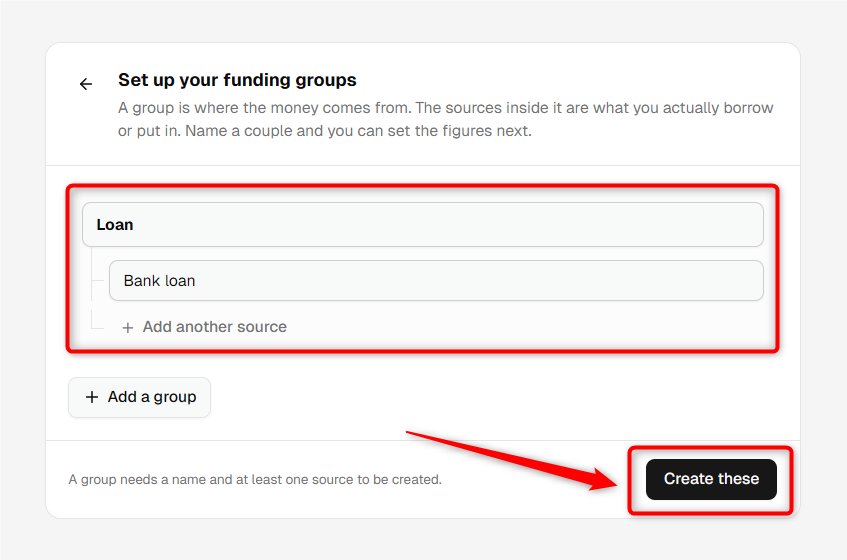
The Set up your funding groups window will open. Enter a name for the funding group and enter a name for your loan as the funding source.
If needed, use Add another source to include additional funding sources within the same group.
Click on Create these when you are ready.
- 3
-
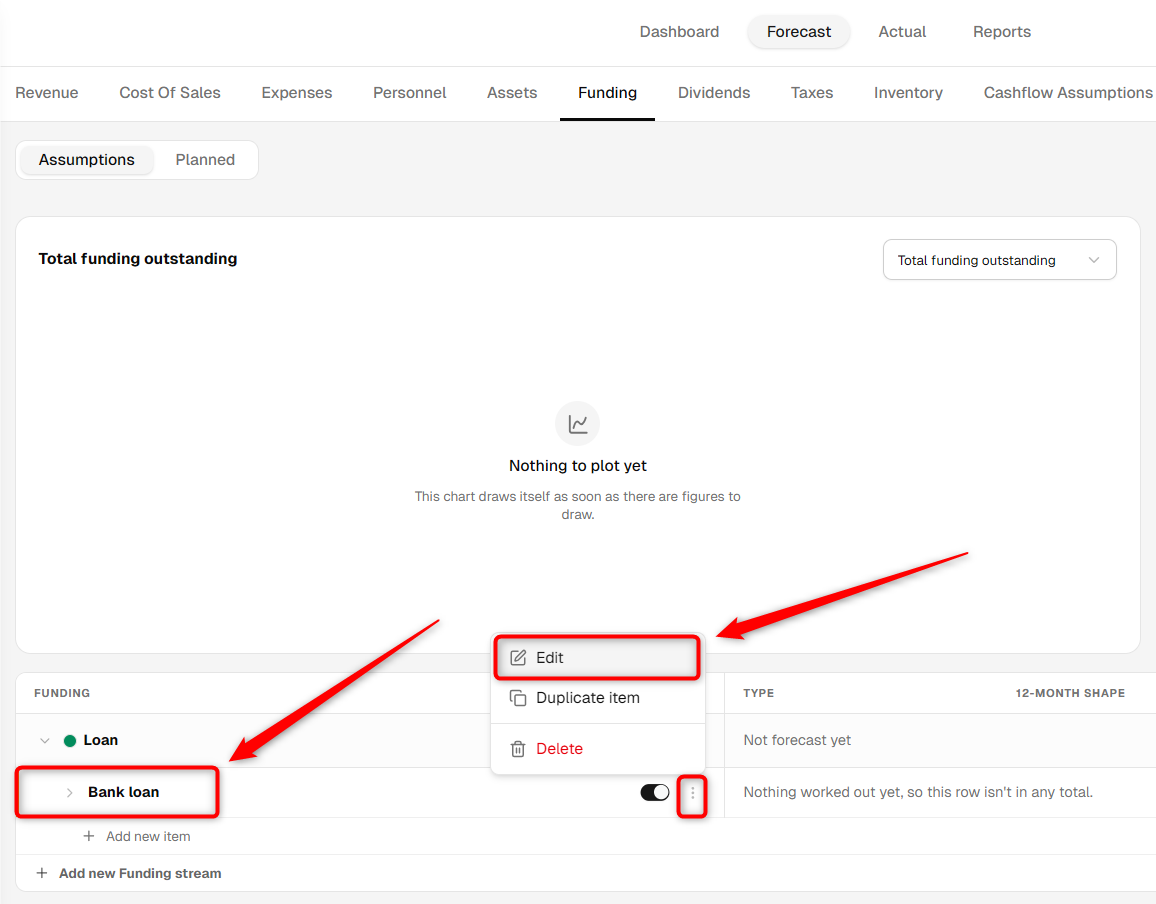
Upmetrics will create the funding group and loan source in your forecast.
Locate the newly created loan under the Funding tab and open it to enter its forecast assumptions.
- 4
-
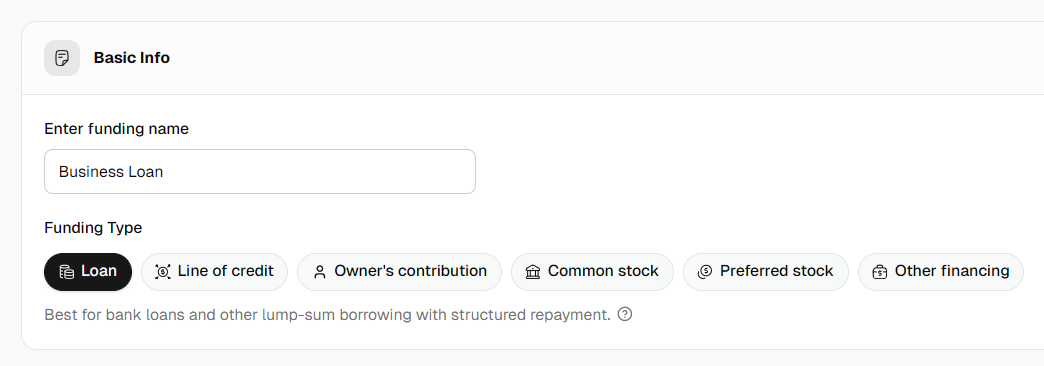
Confirm the funding source name and select Loan as the funding type.
TIP: Moving finance items from one group to another is hassle-free. For a detailed walkthrough, check out our help guide here.
- 5
-
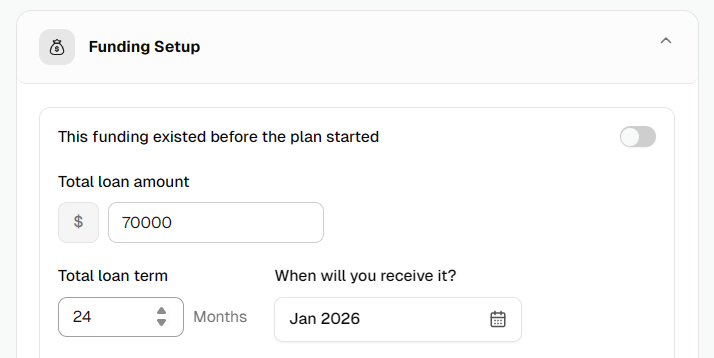
Enter the total loan amount and specify the loan term in months.
Select the date you expect to receive the loan funds. Turn on the applicable toggle if the loan existed before the plan started.
- 6
-
Enter the loan's interest rate and select the date when interest should begin accruing.

- 7
-
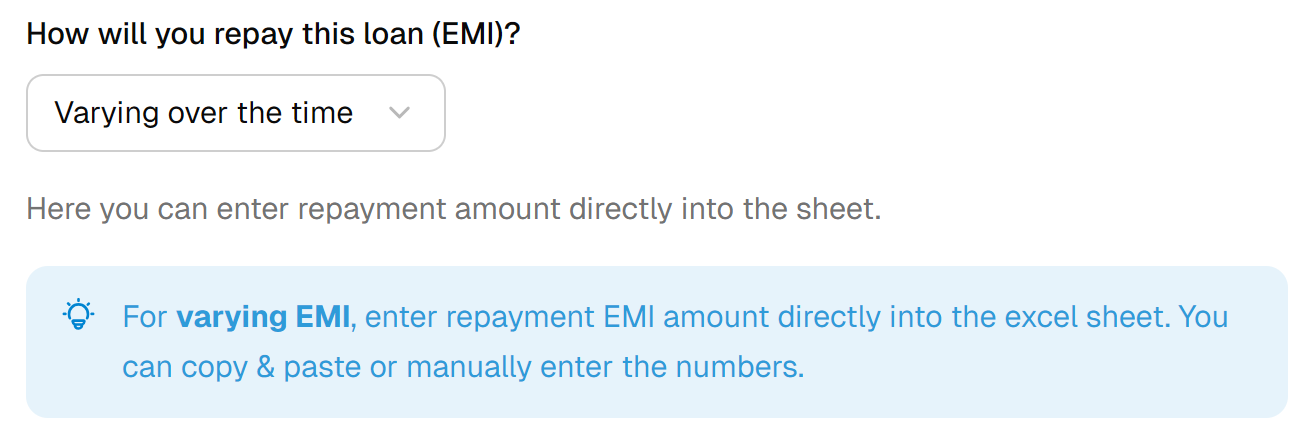
Select how you intend to repay the loan. Depending on your loan structure, you can use calculated repayments, fixed payments, or adjustments over time.
- 8
-
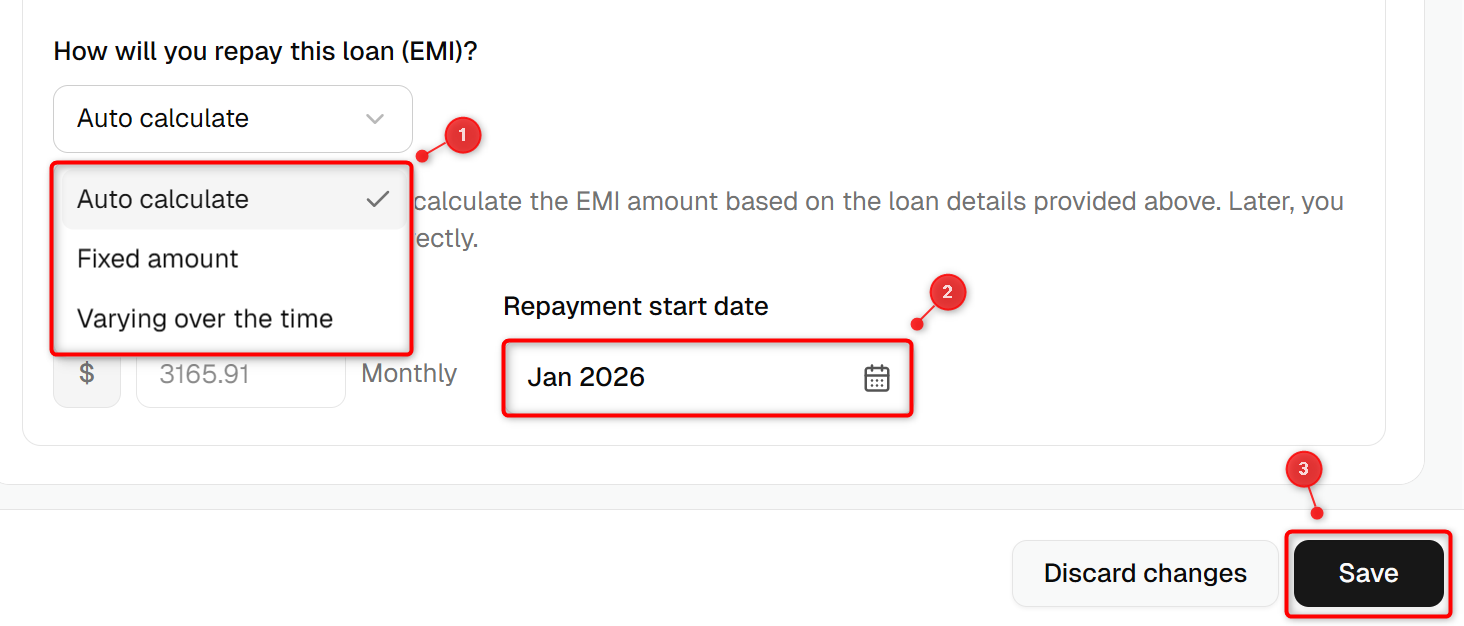
Set the Repayment start date. This is the date when you expect to begin paying back the loan.
A loan can have a period between receiving the funds and making the first repayment. This is commonly referred to as a grace period.
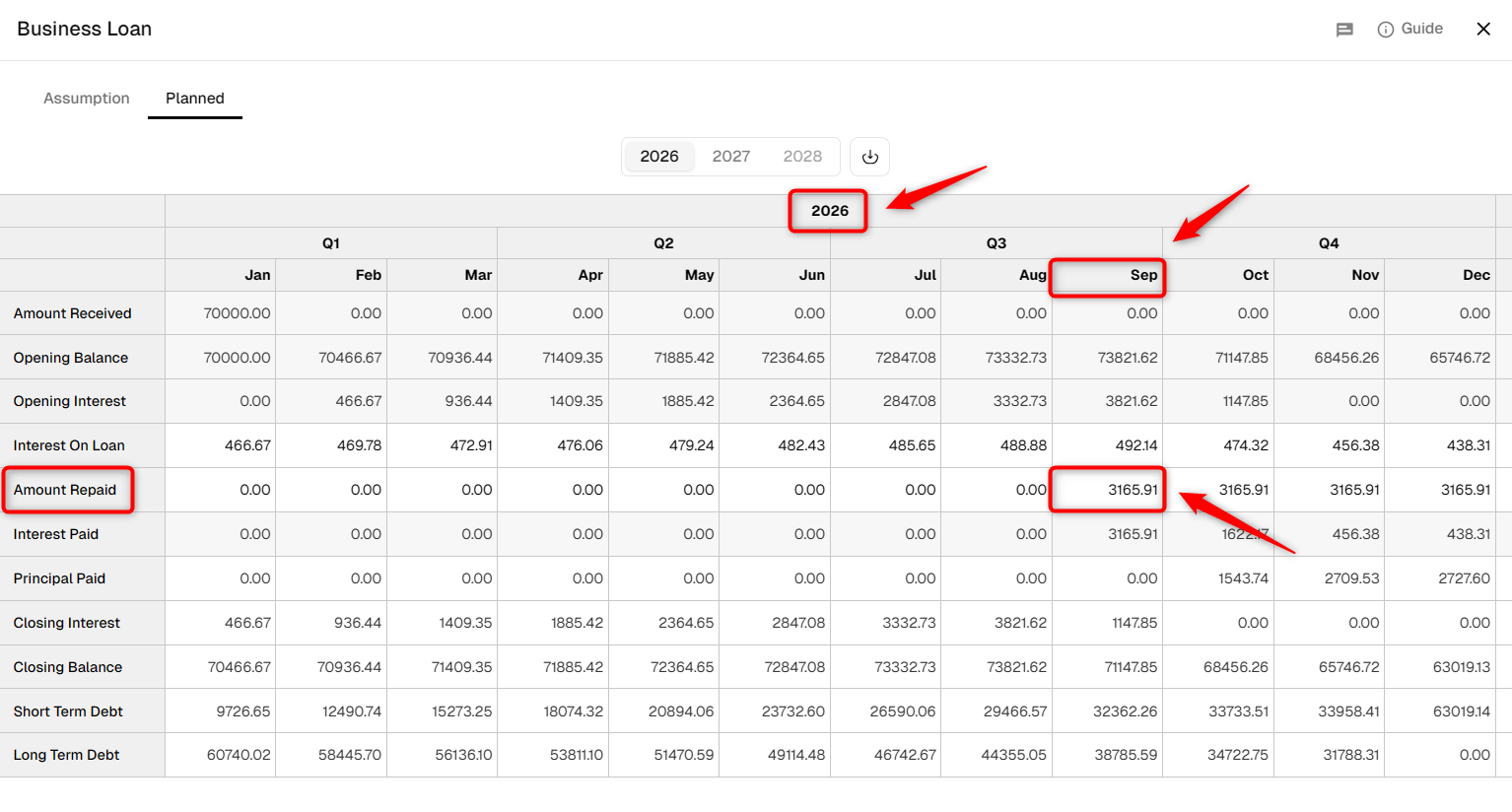
Example: If you receive a loan in January 2025 but the loan terms allow you to begin repayments in September 2025, set the Repayment start date to September 2025.
- 9
-
Review the loan assumptions and click on Save.
Upmetrics will calculate the loan based on the assumptions you entered and include the applicable principal, interest, and repayments in your financial forecast.
TIP: You can return to the Funding tab at any time to update the loan assumptions if your financing terms change.
Adding Special Types of Loans
Sometimes, your loan may have special repayment or interest terms. The guides below explain how to enter some common types of specialty loans:
Where does this entry appear in the financial statements?
When you enter a Loan, only the interest portion appears in your Profit and Loss statement. This is because interest represents the financing cost incurred by your business.

The outstanding loan balance appears on the Balance Sheet. A loan that will be repaid within 12 months is shown as Short-Term Debt. A loan extending beyond 12 months may also be shown as Long-Term Debt.
TIP: To learn more about short-term and long-term debt, click here.

In the Cash Flow statement, the funds your business receives from the loan are reflected under the Loan Received section.

Once your loan is set up, Upmetrics will include it in your financial forecast based on the assumptions you entered. You can update these assumptions from the Funding tab whenever required.