Entering a loan with interest-only payments
When you enter a standard loan into your finance forecast, Upmetrics will calculate interest and loan payments based on the assumptions you enter. Sometimes, a loan agreement requires you to make only interest payments for a period before you begin repaying the principal. Here's how to represent that type of loan in your forecast.
In the example below, we'll enter a 36-month, $10,000 loan with 12% interest. We'll make interest-only payments for the first 6 months. To enter this loan into the forecast, we'll need to know two things ahead of time:
- The amount of the interest-only payments
- The amount of the interest-plus-principal payments
If you aren't sure of these amounts, you may want to consult your lender or use a loan payment calculator.
Entering a Loan with Interest-Only Payments:
You can create the loan using automatic forecasting or set it up yourself using manual forecasting.
Automatic forecasting:
- 1
-
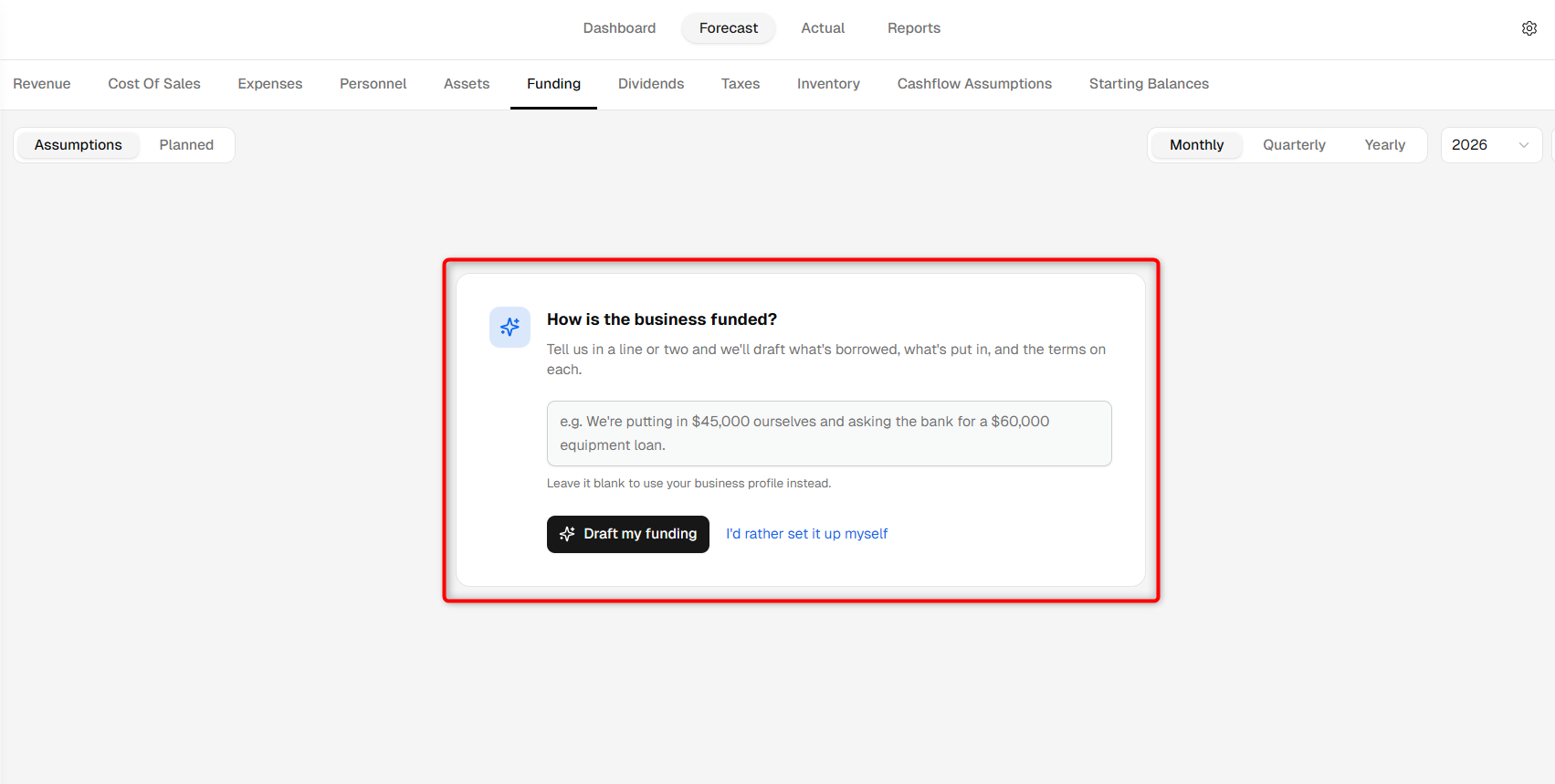
Under the Forecast tab of the Finance Forecasting module, click on the Funding tab.
You will see a setup window where you can describe how the loan is structured.
- 2
-
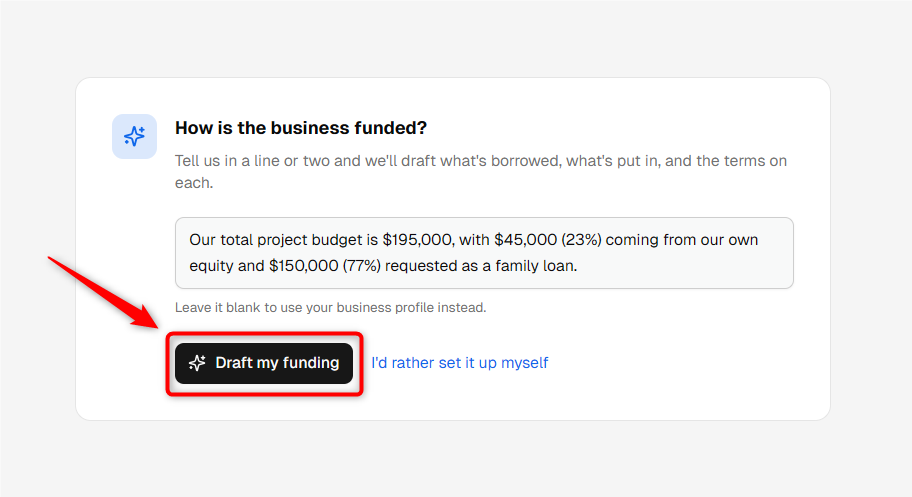
Enter the loan details in plain text. Include information such as the loan amount, loan term, interest rate, how long you will make interest-only payments, and when principal repayments begin.
Click on Draft my funding.
- 3
-
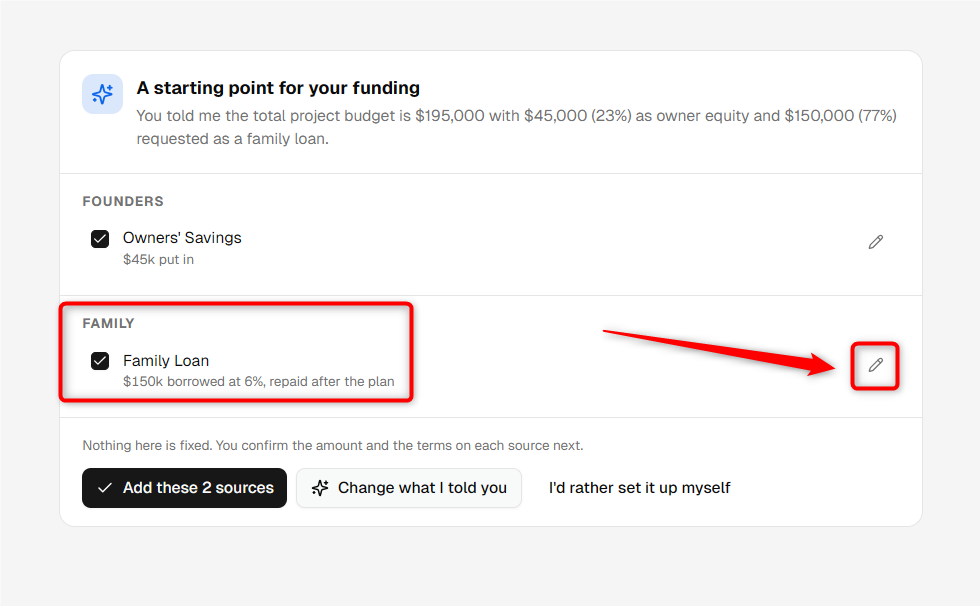
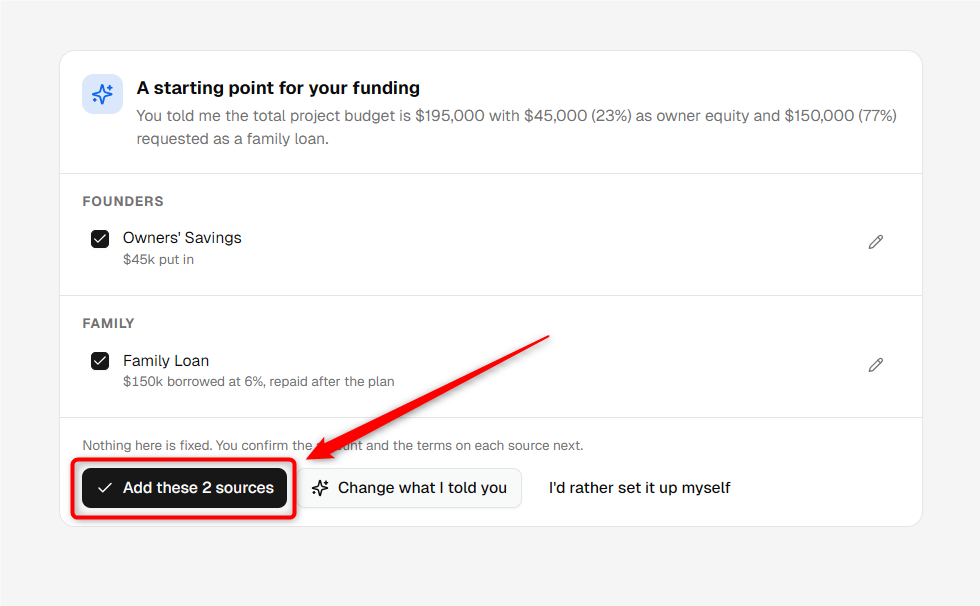
Upmetrics will draft the funding source based on the information you entered.
Review the suggested loan and its assumptions. If required, click on the Edit icon to make changes.
- 4
-
Once the details look correct, click on Add these sources.
The loan will be added to your forecast, where you can review or update the funding assumptions whenever needed.
TIP: Include the interest-only period, interest rate, loan term, and repayment expectations in your description. Providing these details helps Upmetrics create a more accurate starting point for the loan.
Manual forecasting:
- 1
-
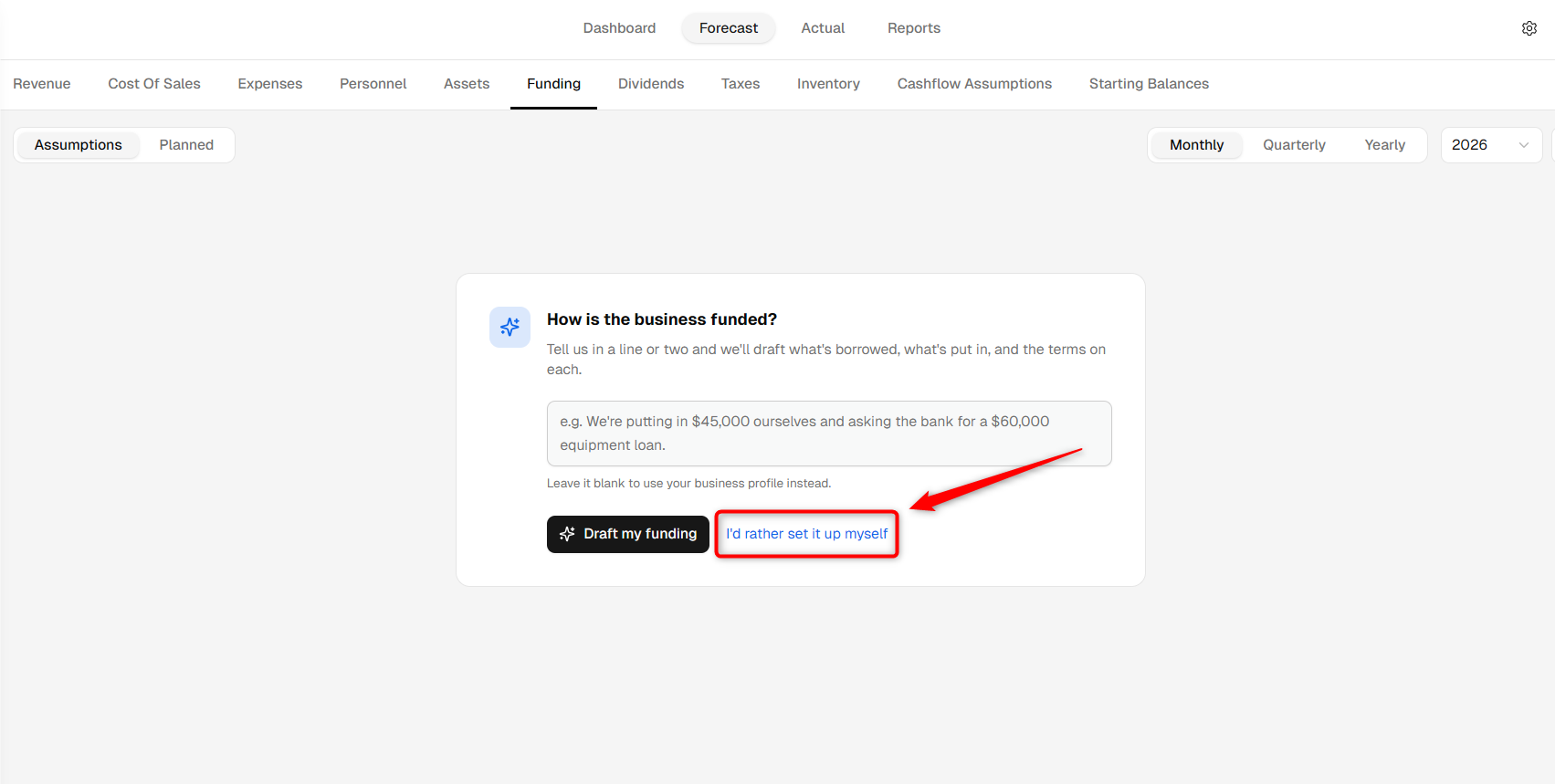
If you prefer to set up the loan manually, click on I'd rather set it up myself from the initial funding setup window.
- 2
-
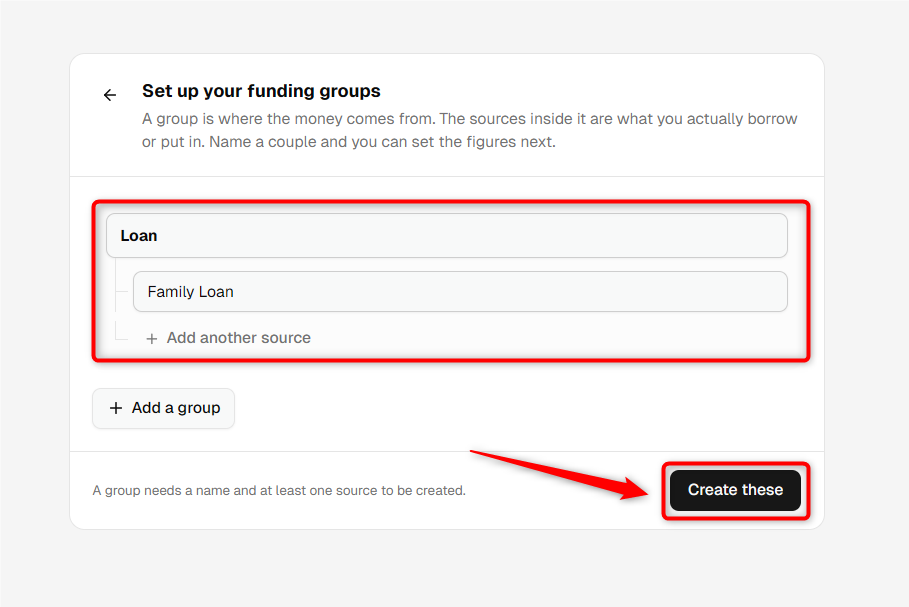
In the Set up your funding groups window, enter a funding group name and a source name for the loan.
Click on Create these.
- 3
-
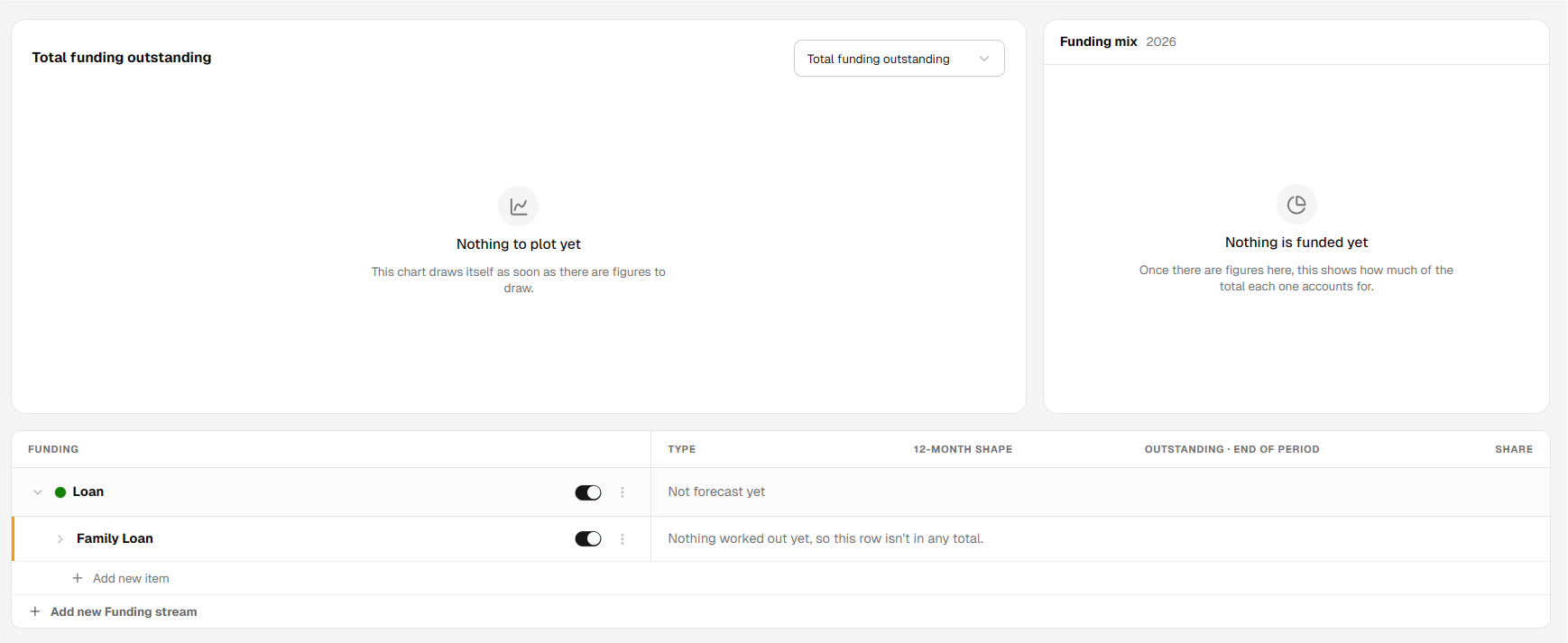
Upmetrics will create the funding source. Locate the newly created loan under the Funding tab.
- 4
-
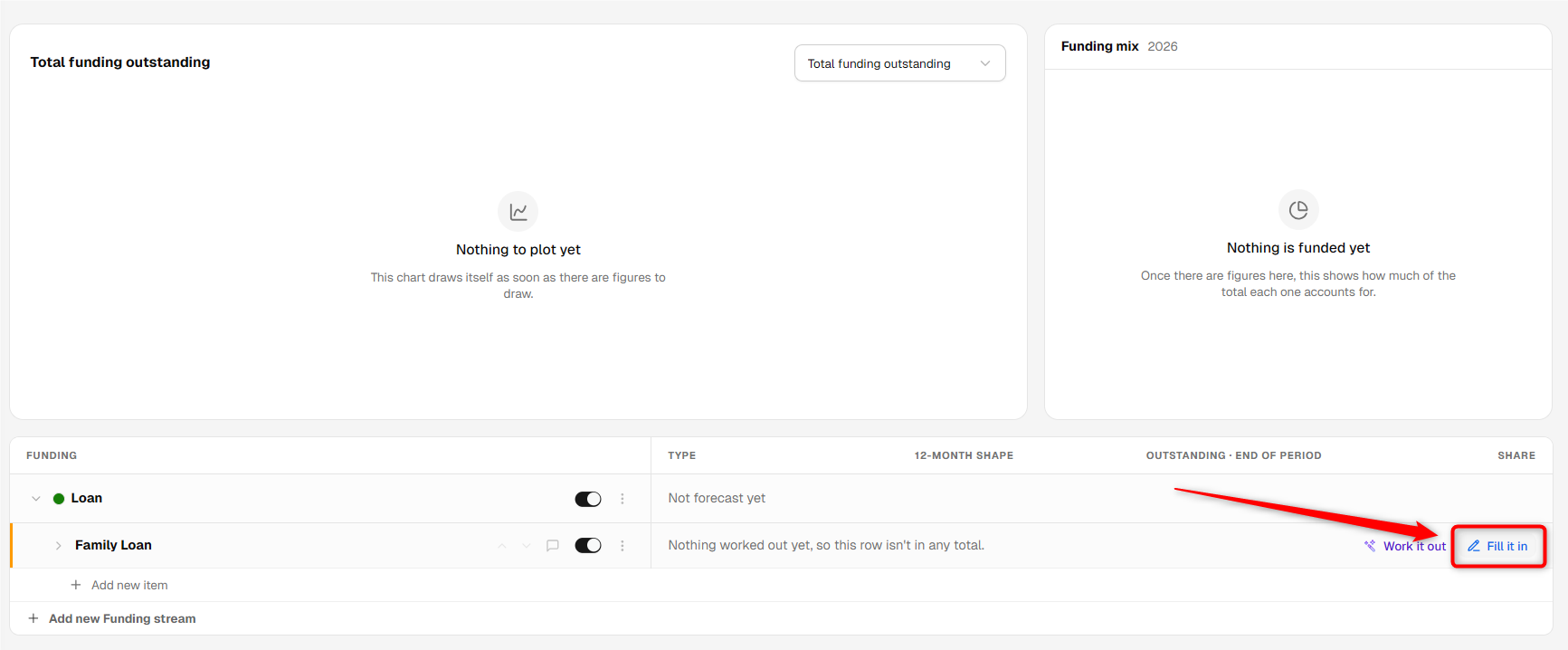
Click on Fill it in to open the assumption form.
- 5
-
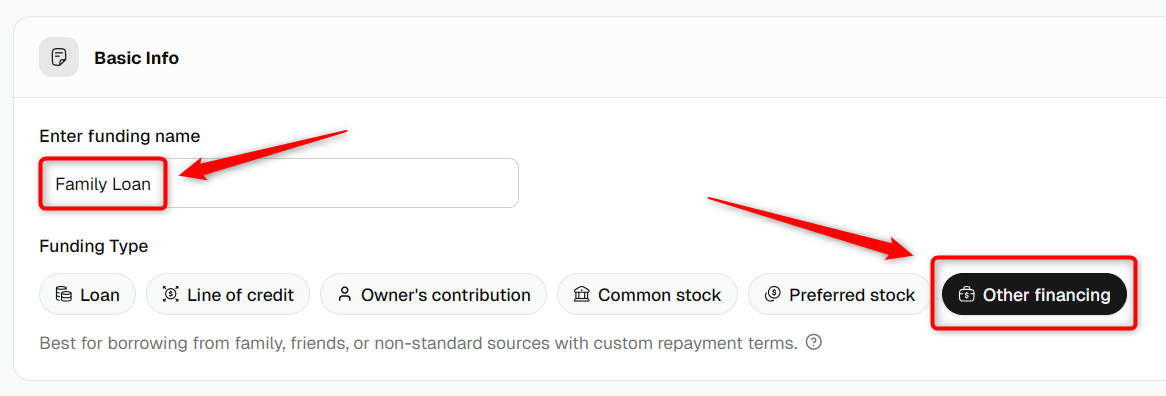
Enter a name for the loan and select the funding type as Other Financing (Borrowed). Toggle the switch if this funding existed before the plan started.
TIP: Moving finance items from one group to another is hassle-free. For a detailed walkthrough, check out our help guide here.
- 6
-
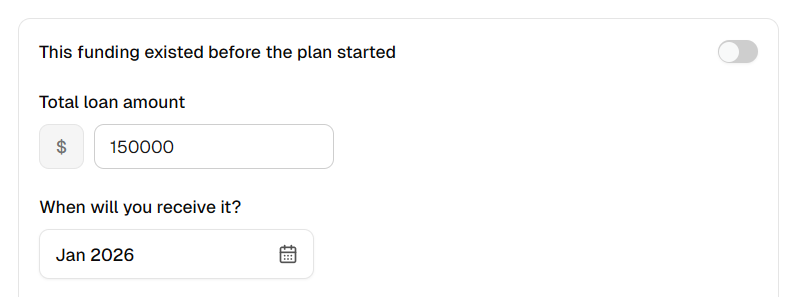
Enter the total loan amount and select the date on which you'll receive the funds.
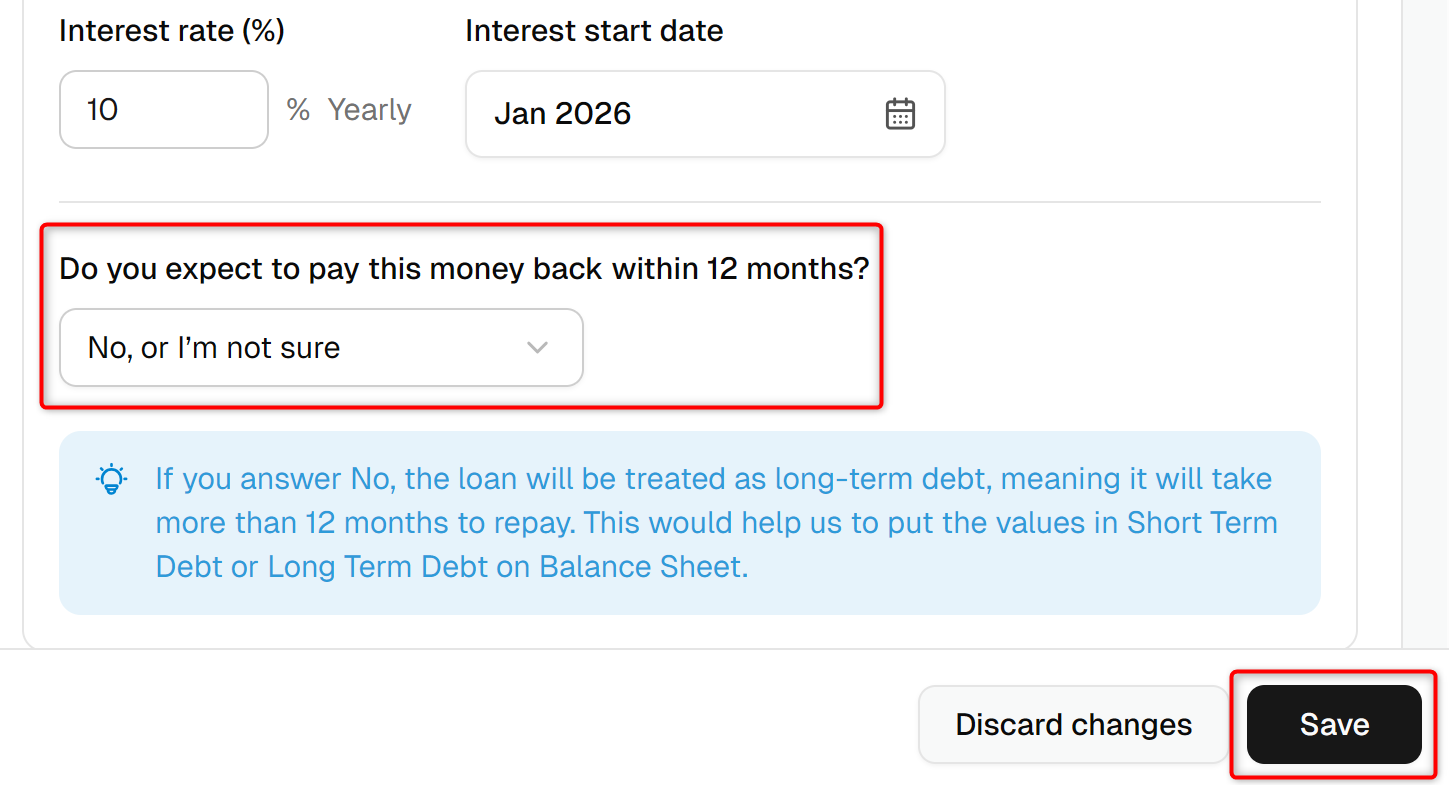
Enter the interest rate as a percentage and select the interest start date. Also indicate whether you expect to repay the financing within 12 months.
Since our example is a 36-month loan, select No, or I'm not sure, and click on Save.
NOTE: A loan you'll repay within 12 months is considered short-term debt in your financial statements. A loan you'll repay in more than 12 months is considered long-term debt. Click here for more.
- 7
-
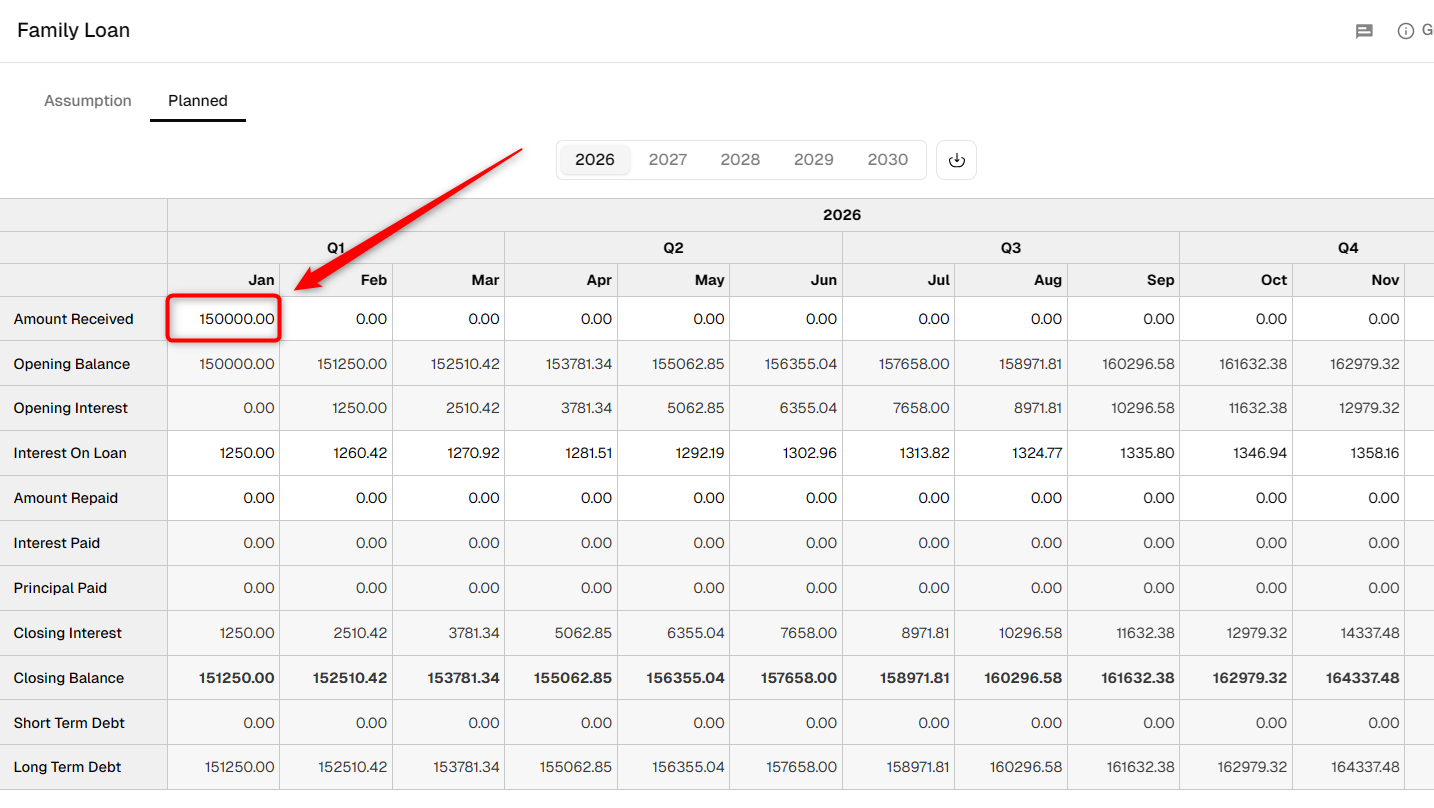
Amount Received: Enter the amount of money you'll receive and when you'll receive it. You can enter a single amount in one period or amounts across multiple periods, depending on how your loan is structured.
- 8
-
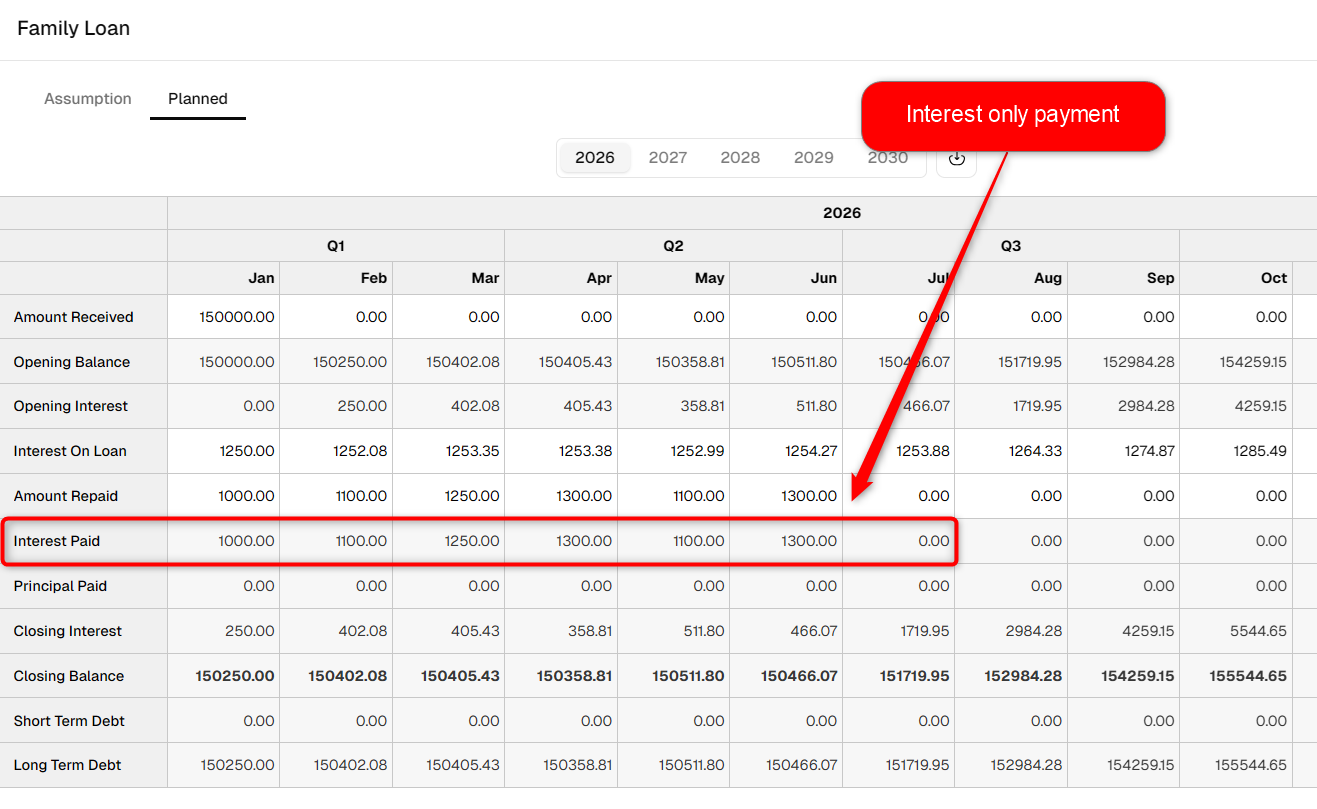
Amount Repaid: Enter the payments you'll make against the loan balance in the applicable periods.
For the interest-only period, enter only the interest payments. After that period ends, enter the interest-plus-principal payments according to your repayment schedule.
The example below shows interest-only payments during the first six months, followed by interest-plus-principal payments in the remaining months.
NOTE: If you aren't sure of your payment amounts, you may want to consult your lender or use a loan payment calculator.
- 9
-
Your updates to the forecast are saved automatically. Once you've finished entering the payment schedule, close the overlay.
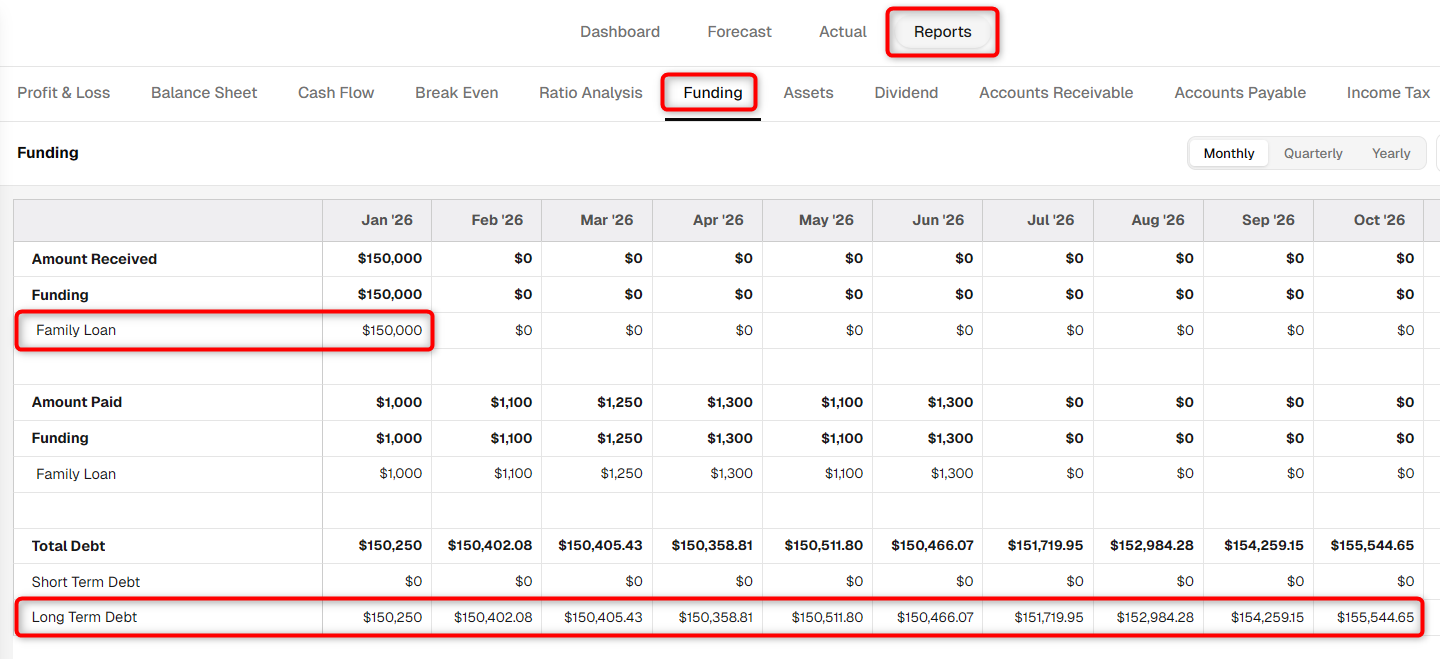
Access the Funding report to review your configured debts, including both long-term and short-term liabilities listed in the finance section.