
Entering a loan with deferred payments
When you enter a Standard Loan into your forecast, Upmetrics will calculate the loan payments based on the assumptions you enter. If you're taking on a loan where repayments do not begin right away, also known as deferred payments, you can represent the delayed repayment schedule in your forecast.
Entering a Deferred Payment Loan:
You can create the deferred payment loan using automatic forecasting or set it up yourself using manual forecasting.
Automatic forecasting:
- 1
-
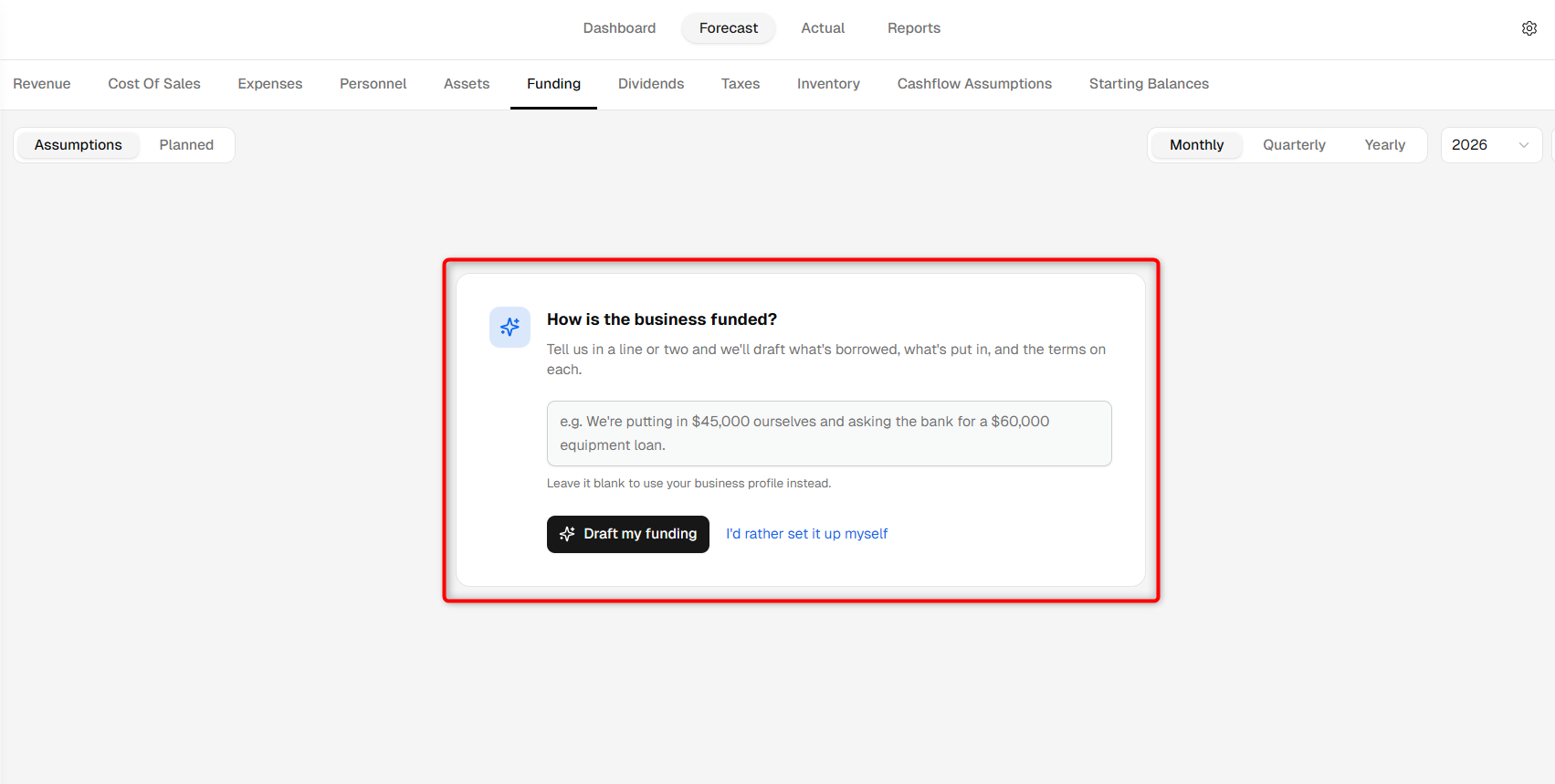
Under the Forecast tab of the Finance Forecasting module, click on the Funding tab.
You will see a setup window where you can describe how the deferred payment loan is structured.
- 2
-
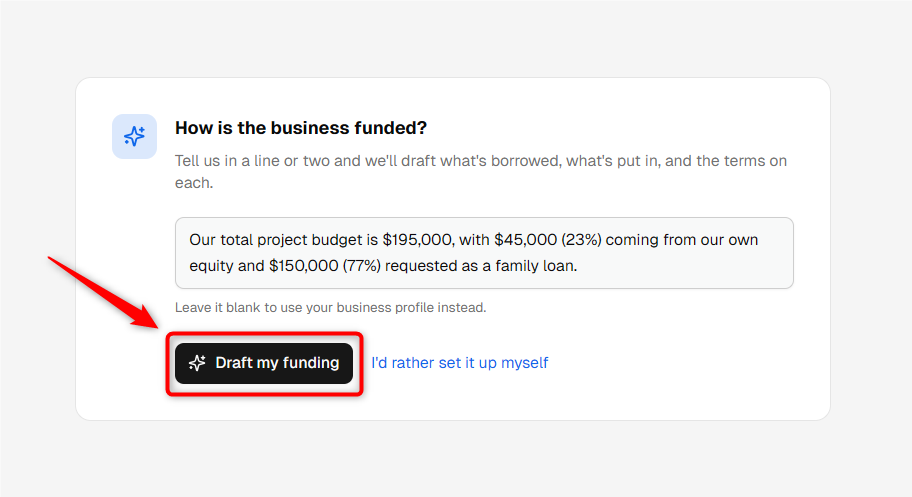
Enter the loan details in plain text. Include information such as the loan amount, interest rate, date you'll receive the funds, how long payments will be deferred, and when repayments will begin.
Click on Draft my funding.
- 3
-
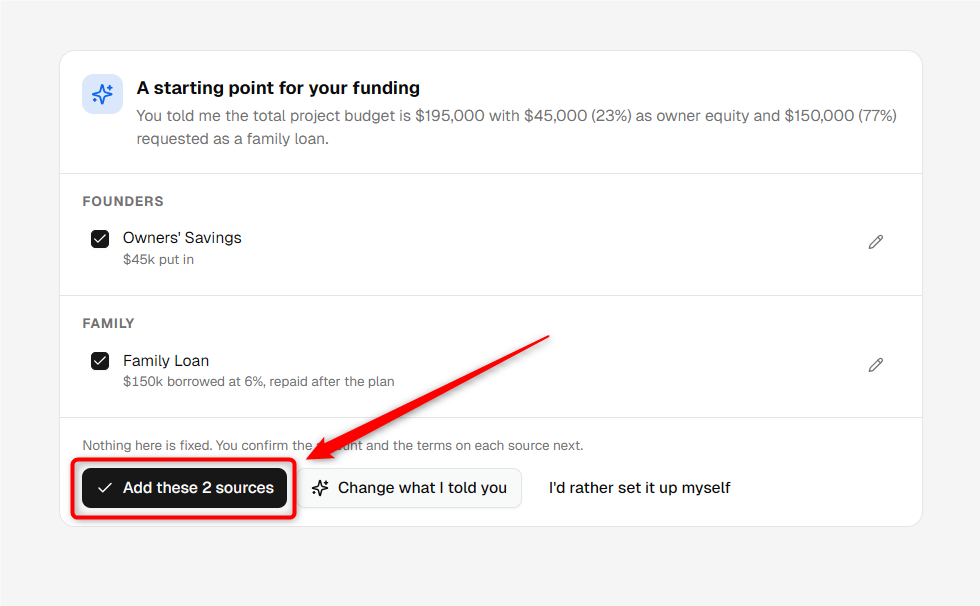
Upmetrics will draft the funding source based on the information you entered.
Review the suggested loan and its assumptions. If required, click on the Edit icon to make changes.

- 4
-
Once the details look correct, click on Add these sources.
The deferred payment loan will be added to your forecast, where you can review or update its assumptions whenever needed.

TIP: Include the loan amount, interest rate, receiving date, repayment start date, and length of the deferred payment period in your description. Providing these details helps Upmetrics create a better starting point for the loan.
Manual forecasting:
- 1
-
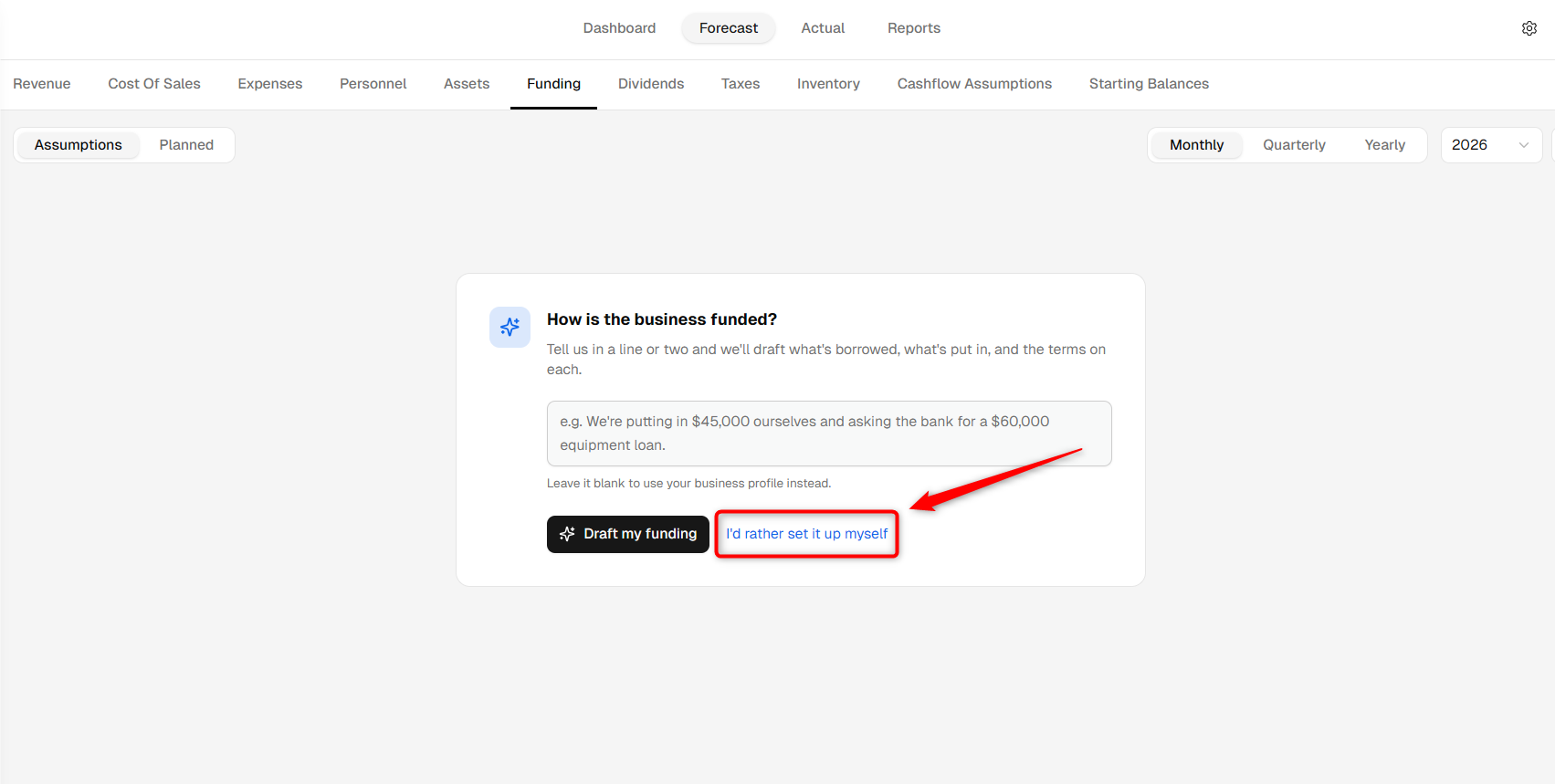
If you prefer to set up the deferred payment loan manually, click on I'd rather set it up myself from the initial funding setup window.
- 2
-
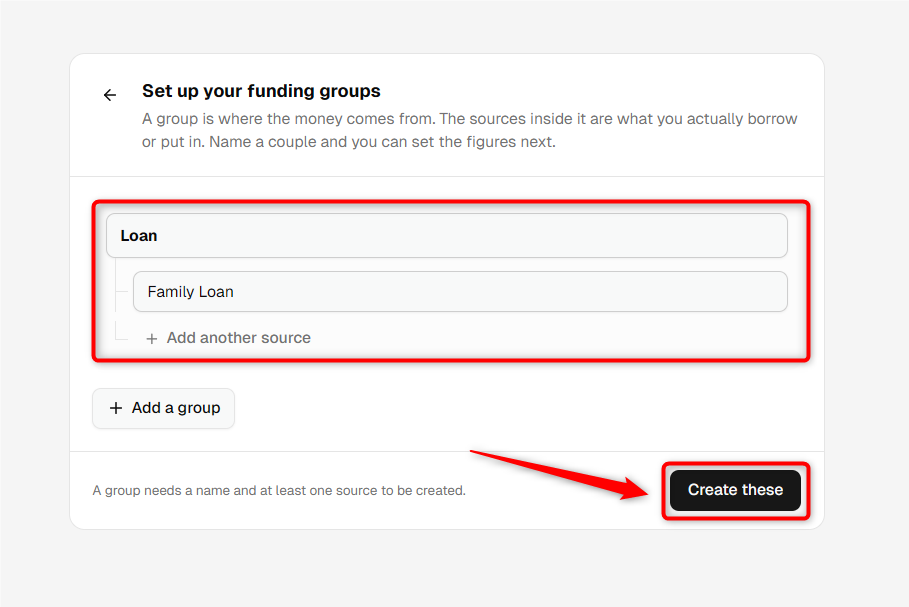
In the Set up your funding groups window, enter a funding group name and a source name for the loan.
Click on Create these.
- 3
-
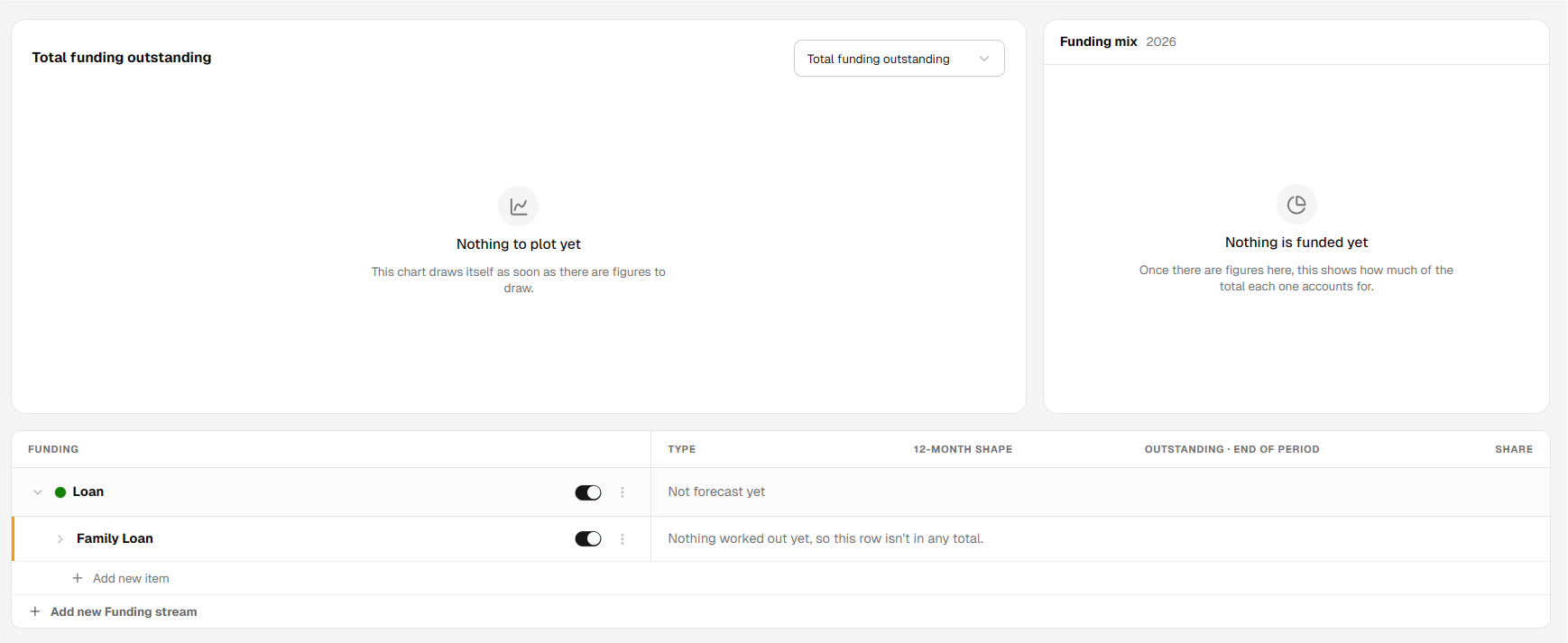
Upmetrics will create the funding source. Locate the newly created loan under the Funding tab.
- 4
-
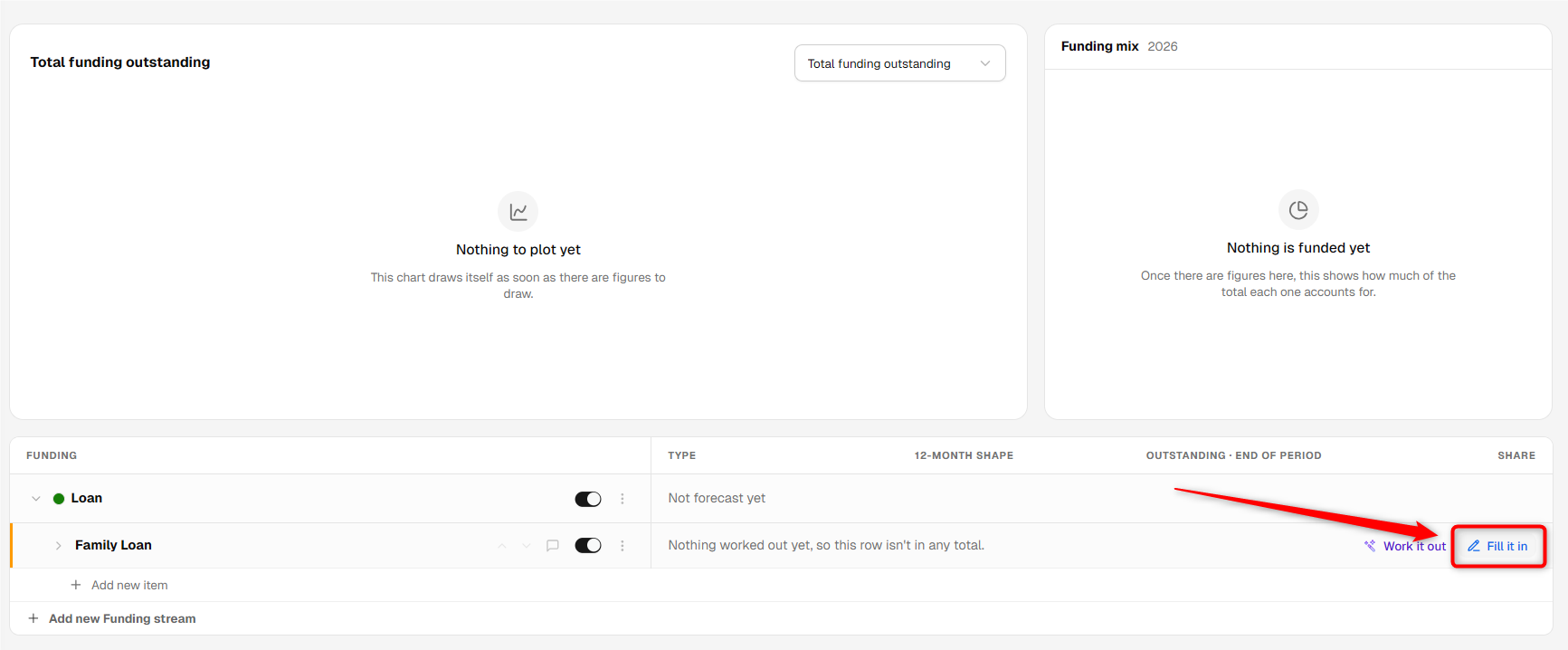
Click on Fill it in to open the assumption form.
- 5
-
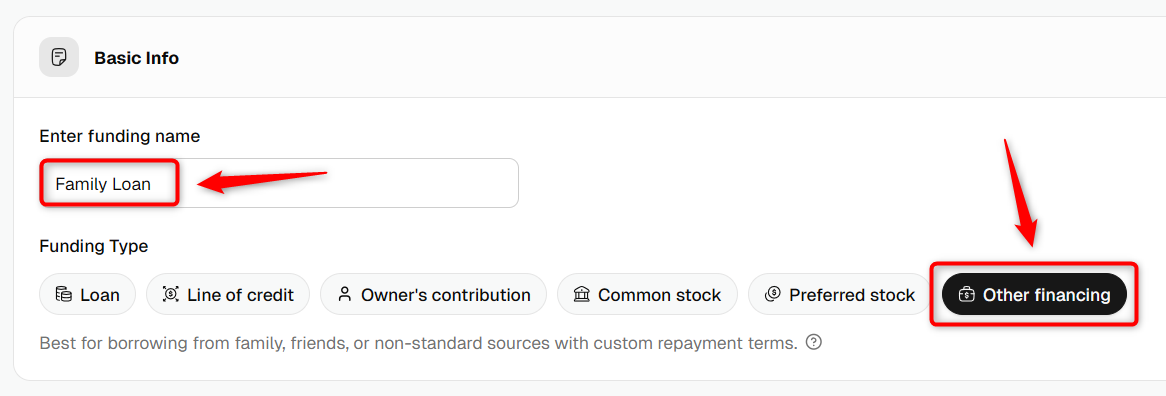
Enter a name for the loan and select the funding type as Other Financing (Borrowed).
TIP: Moving finance items from one group to another is hassle-free. For a detailed walkthrough, check out our help guide here.
- 6
-
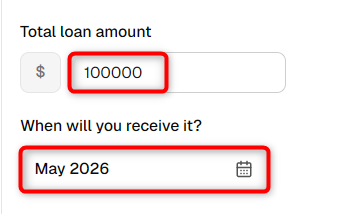
Enter the Total Loan Amount, then select the Loan Received Date to indicate when the funds were or will be received.
- 7
-
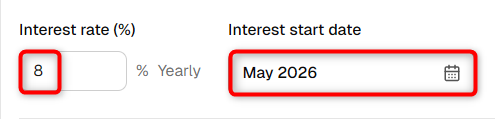
Enter the applicable Interest Rate (%) and select the Interest Start Date. This determines when interest begins to accrue, even if you don't start making repayments immediately.
- 8
-
Specify the expected repayment period:
- Select Yes if the loan will be repaid within 12 months.
- Select No, or I'm not sure if repayment will take longer than 12 months.
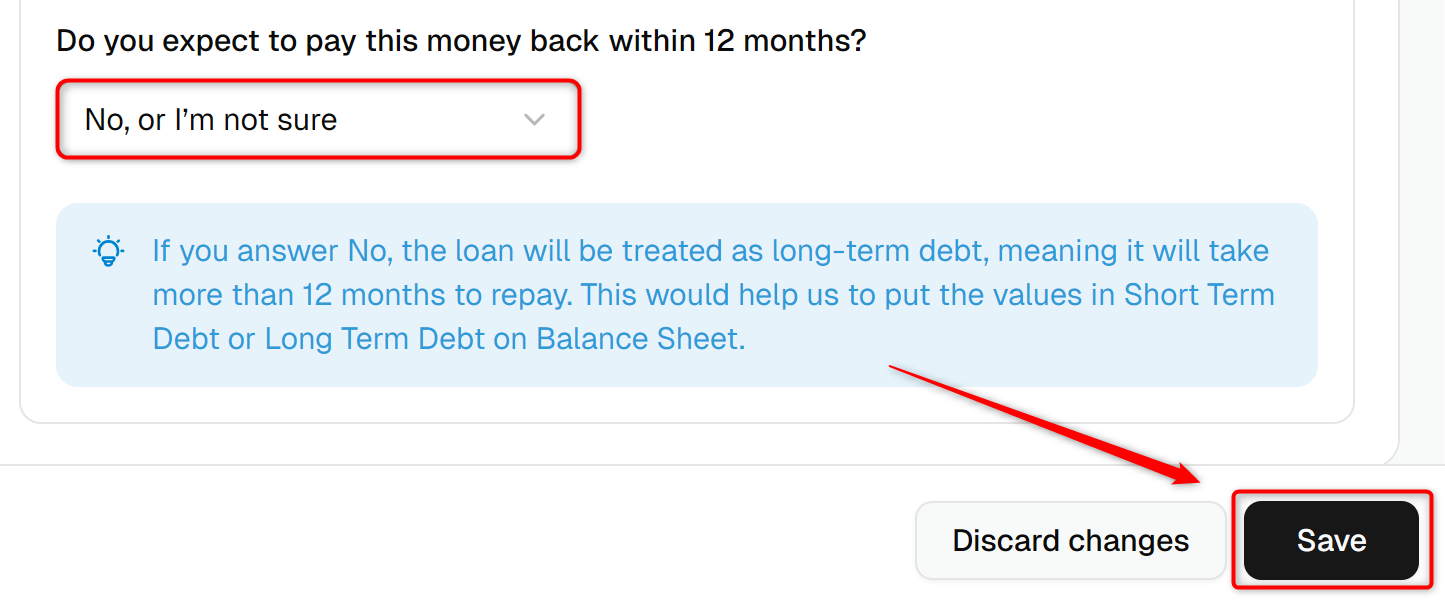
This helps Upmetrics classify the loan as short-term or long-term debt on your financial statements. Click on Save.
TIP: Learn more about short-term and long-term debt. Click here.
- 9
-
Amount Received: Enter the loan amount in the period in which you expect to receive the funds. You can enter the full amount in one period or amounts across multiple periods, depending on how your loan is structured.
Upmetrics will calculate the applicable interest and other loan values based on the assumptions you've entered.
- 10
-
Amount Repaid: Leave the repayment periods blank during the deferred payment period. Starting in the period when repayments begin, enter the amount you plan to repay each month or year against the outstanding balance.
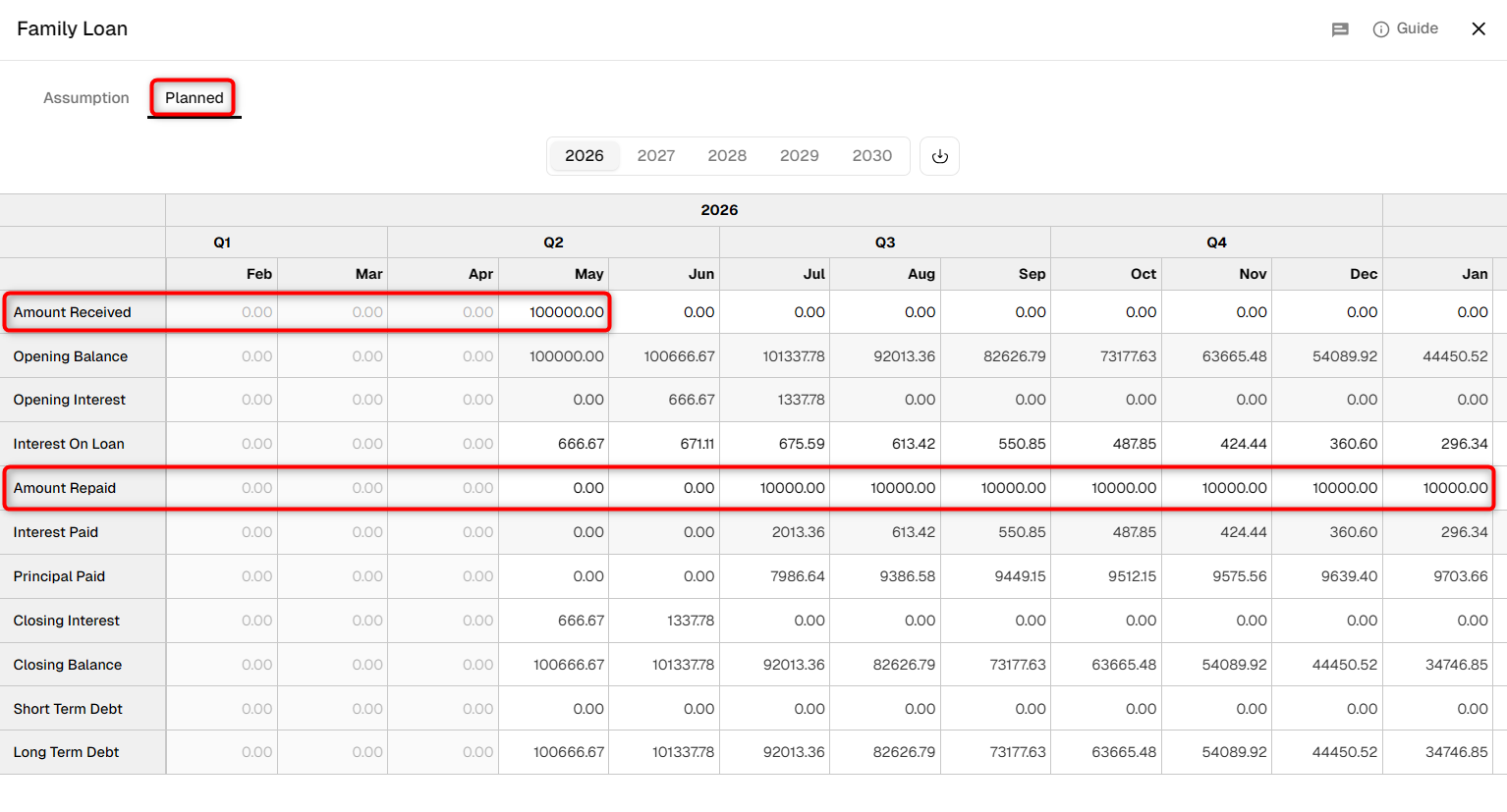
NOTE: If you aren't sure of your payment amounts, you may want to consult your lender or use a loan payment calculator.
- 11
-
Your updates to the forecast are saved automatically. Once you've entered the repayment schedule, close the overlay.
The loan and its payments will be displayed in the Financing table.
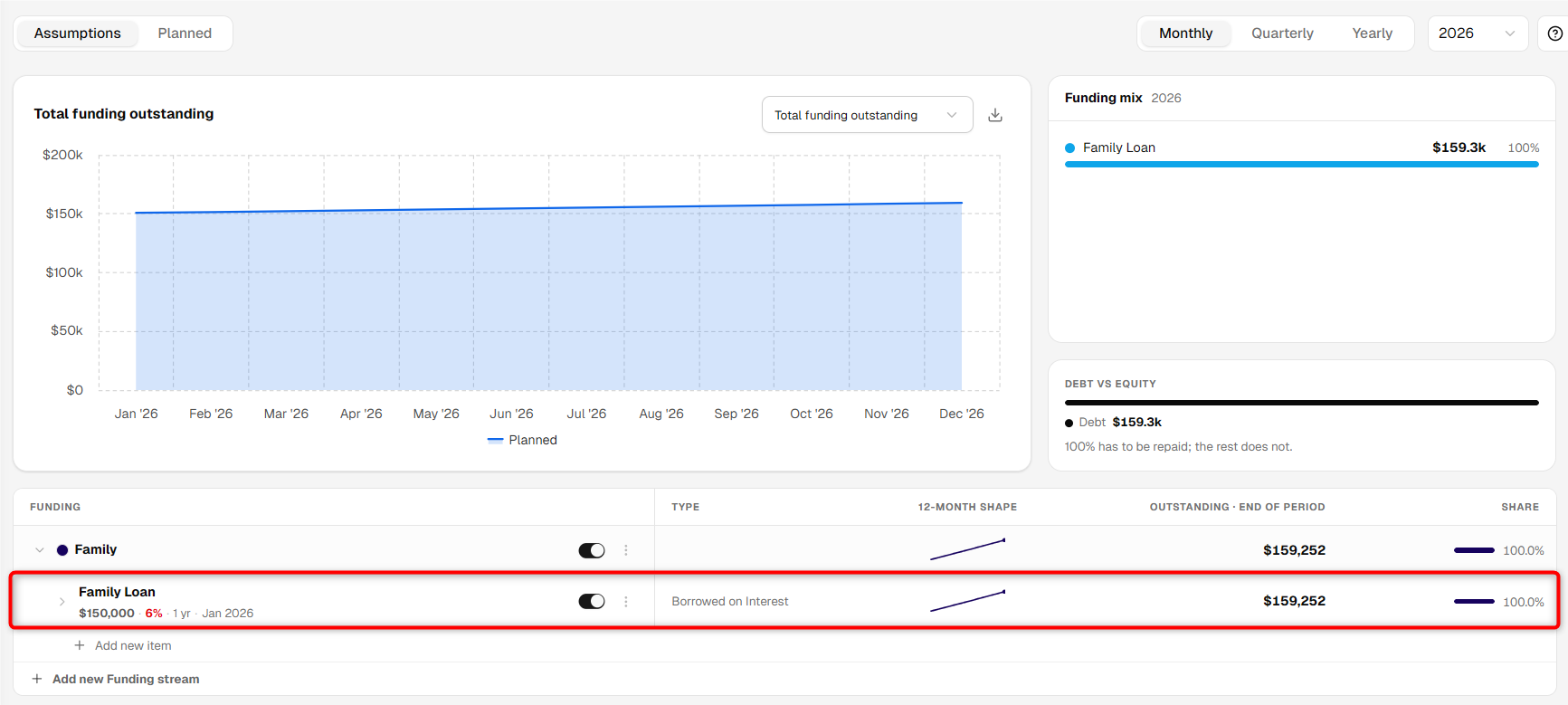
NOTE: If you've entered an interest rate for the loan, interest will begin calculating from the selected interest start date and continue accruing during the deferred payment period. If your loan also has deferred interest, read Entering a loan with deferred interest.