Entering convertible debt
In this article
Convertible Debt, also known as a Convertible Loan or Convertible Note, is a type of loan that can later convert into investor equity. For example, an investor may lend money to your business initially and receive an ownership stake instead of being repaid in cash.
The conversion from debt to equity usually happens when a future event occurs. You and your investor typically agree on this event in advance. Common examples include raising another round of funding or reaching a specific business milestone.
Because the agreement begins as a loan, interest may accrue over time. When the loan converts, the investor's financial stake may therefore be greater than the original amount borrowed.
To represent convertible debt in your Upmetrics forecast, you will need two funding entries:
You will also need to determine the month in which you expect the loan to convert into equity.
Entering the Initial Loan
- 1
-
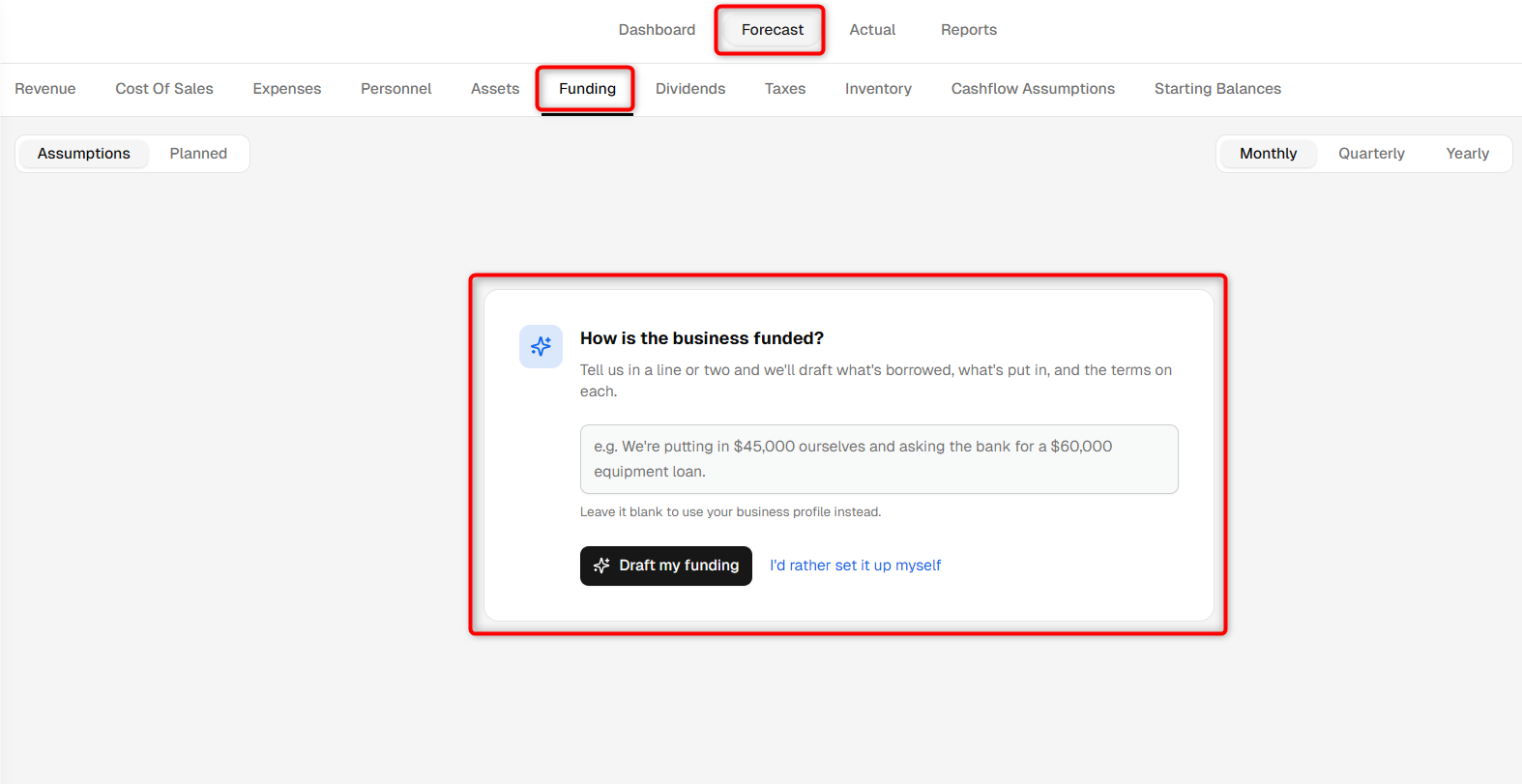
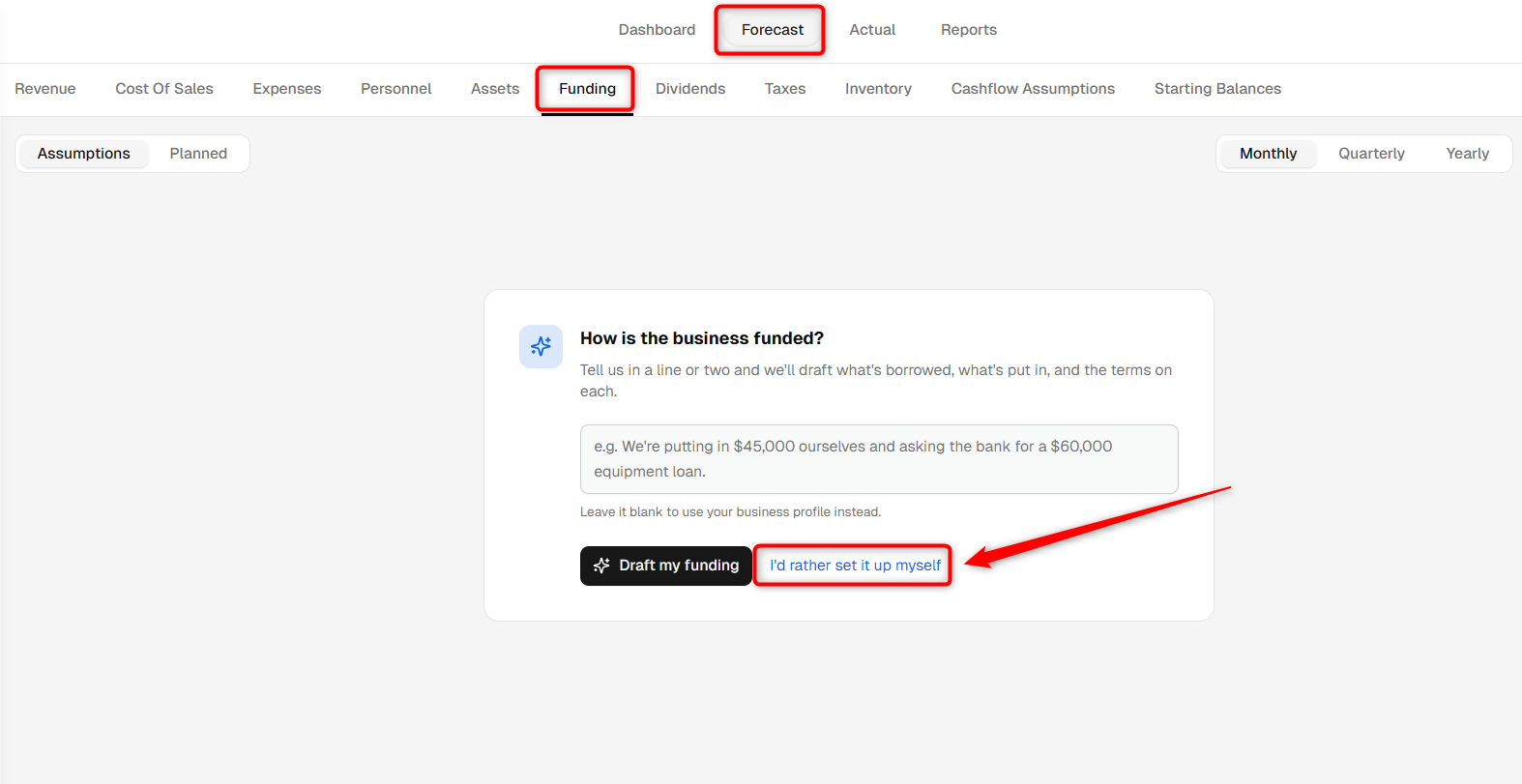
Go to the Forecast tab of the Finance Forecasting module and select Funding.
You will see the funding setup interface asking How is the business funded?
- 2
-
Enter a short description of how your business is being funded. Include details such as the amount you plan to borrow or invest and the type of funding involved.
Click Draft my funding. Upmetrics will use the information you entered to draft the relevant funding groups and sources.
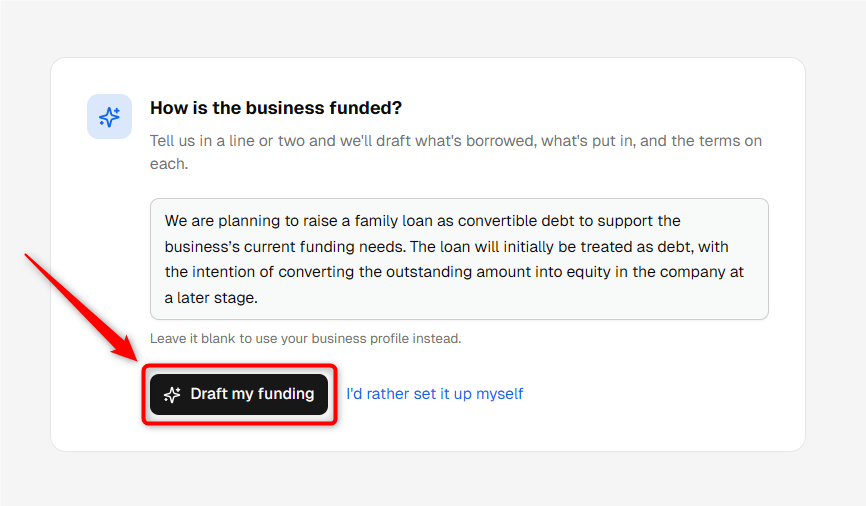
TIP: Include the lender or investor, expected amount, and purpose of the funding where possible. This helps the system create a more relevant starting point.
- 3
-
Review the funding entries created by the system and add the appropriate funding source to your forecast.
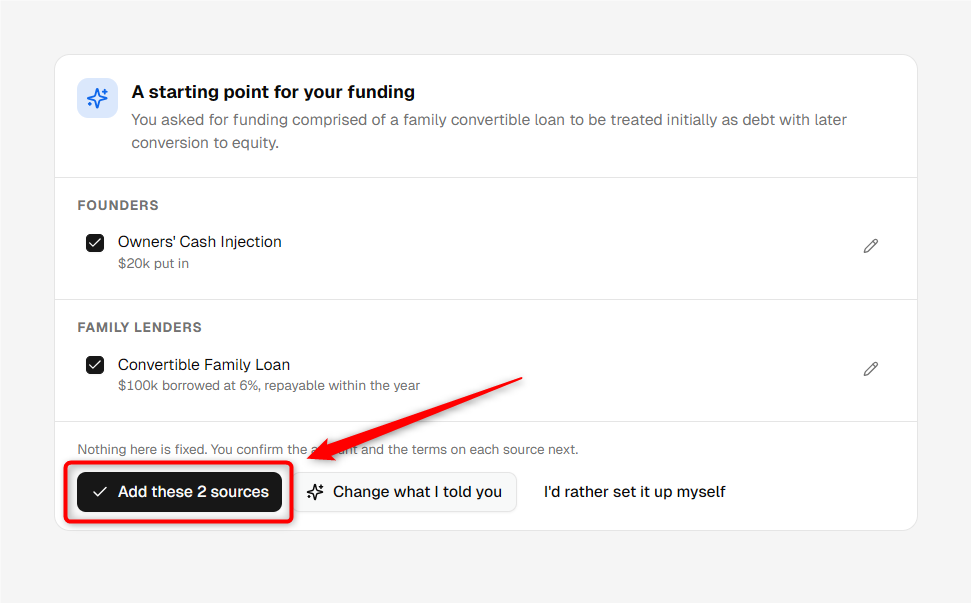
If you prefer to create the funding entry manually, click I'd rather set it up myself.
- 4
-
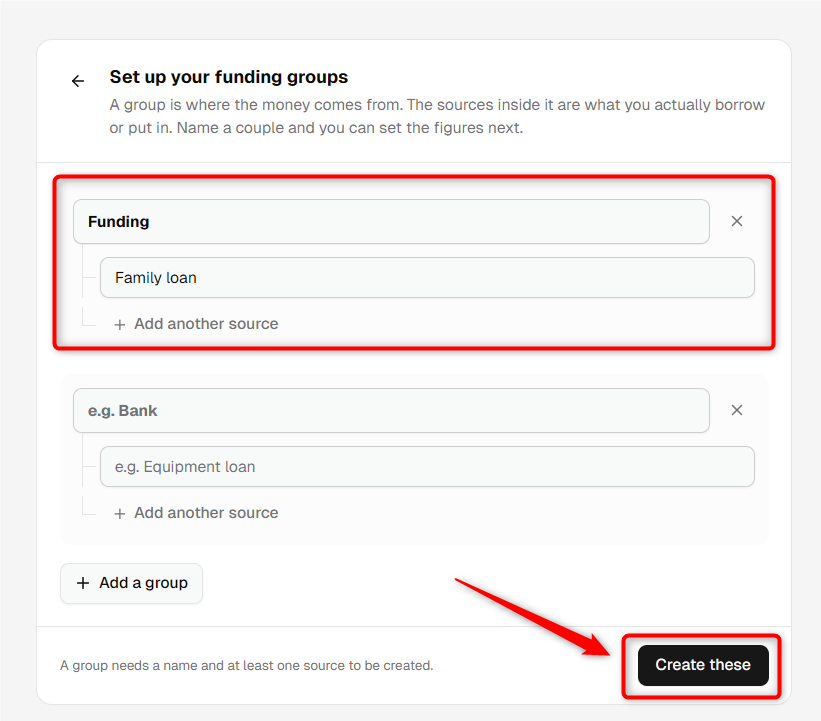
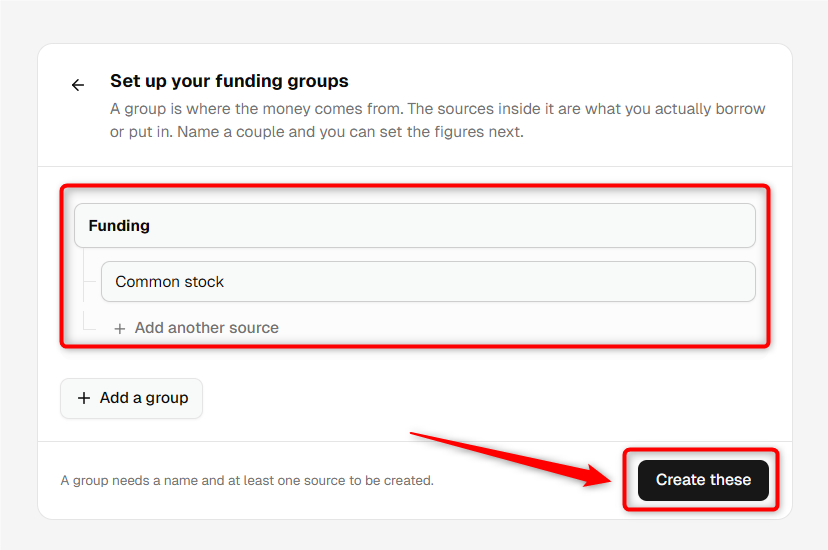
For manual setup, enter a name for your funding group and at least one funding source. You can use Add another source to add more sources to the same group or Add a group to create another funding group.
Click Create these when you are ready.
- 5
-
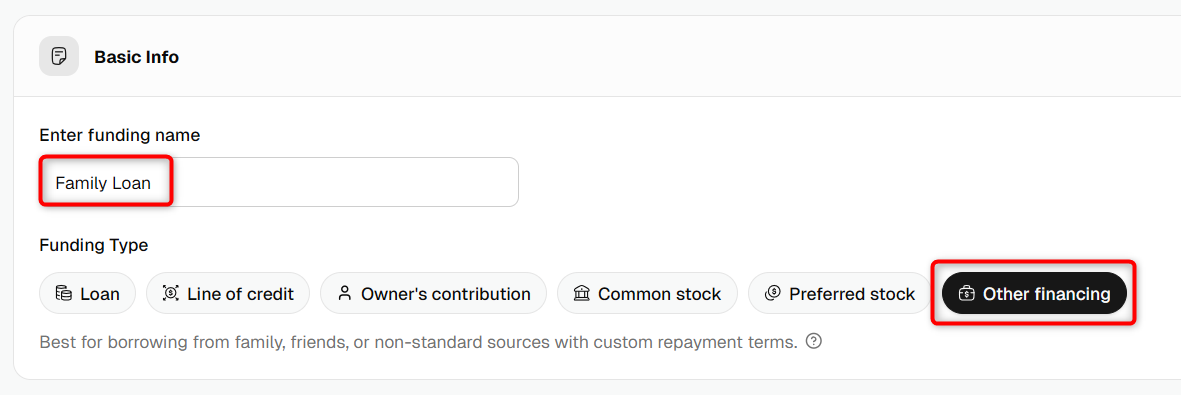
Upmetrics will create the funding source and open its assumption form.
Enter a name for the loan and select Other Financing (Borrowed) as the funding type.
TIP: Moving finance items from one group to another is hassle-free. For a detailed walkthrough, check out our help guide here.
- 6
-
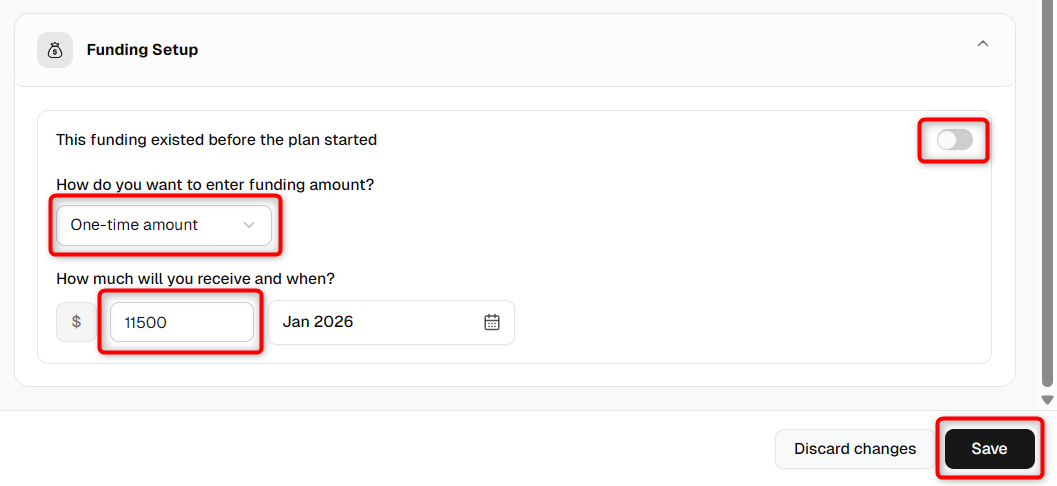
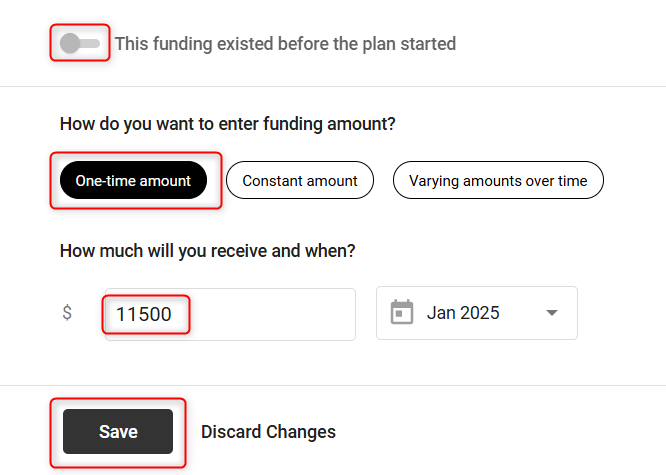
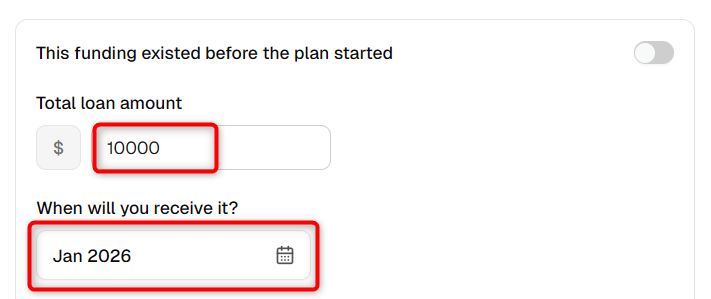
Toggle the option if this funding existed before the plan started. Enter the total loan amount and select the date on which the funds will be received.
Enter the interest rate and select the interest start date. Then indicate whether you expect to repay the loan within 12 months.
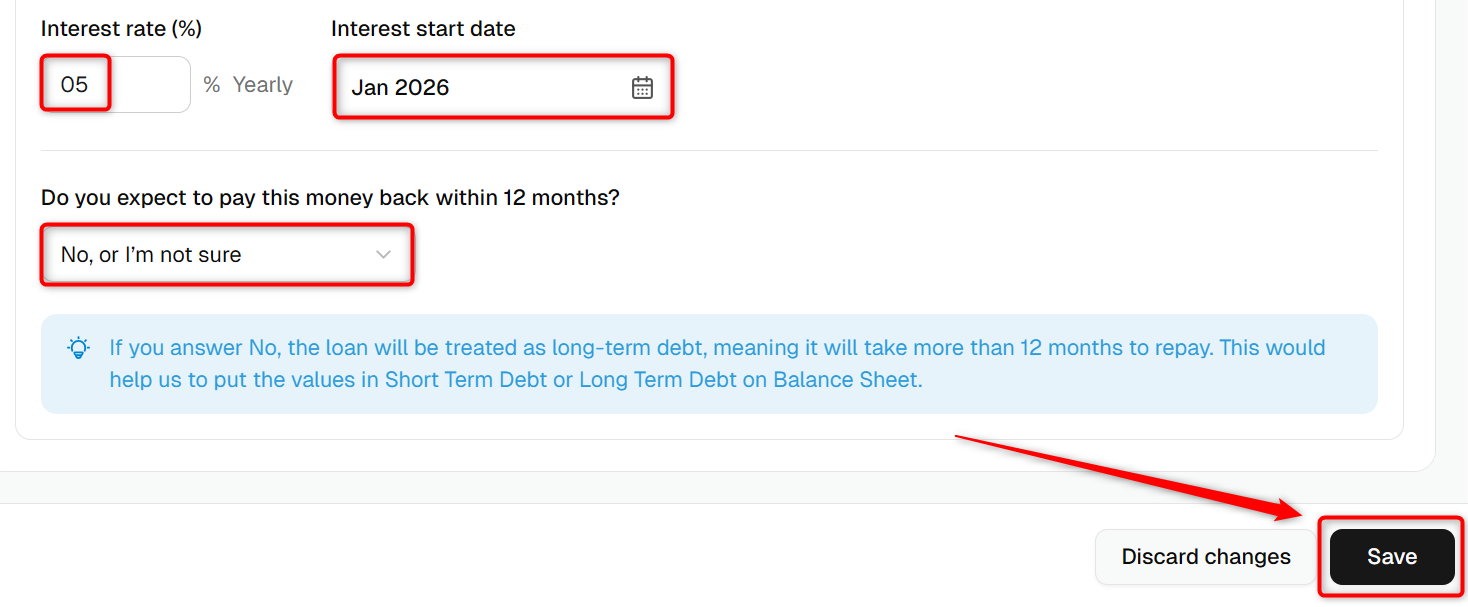
NOTE: A loan you expect to repay within 12 months is considered short-term debt in your financial statements. A loan repaid after more than 12 months is considered long-term debt. Click here to learn more.
- 7
-
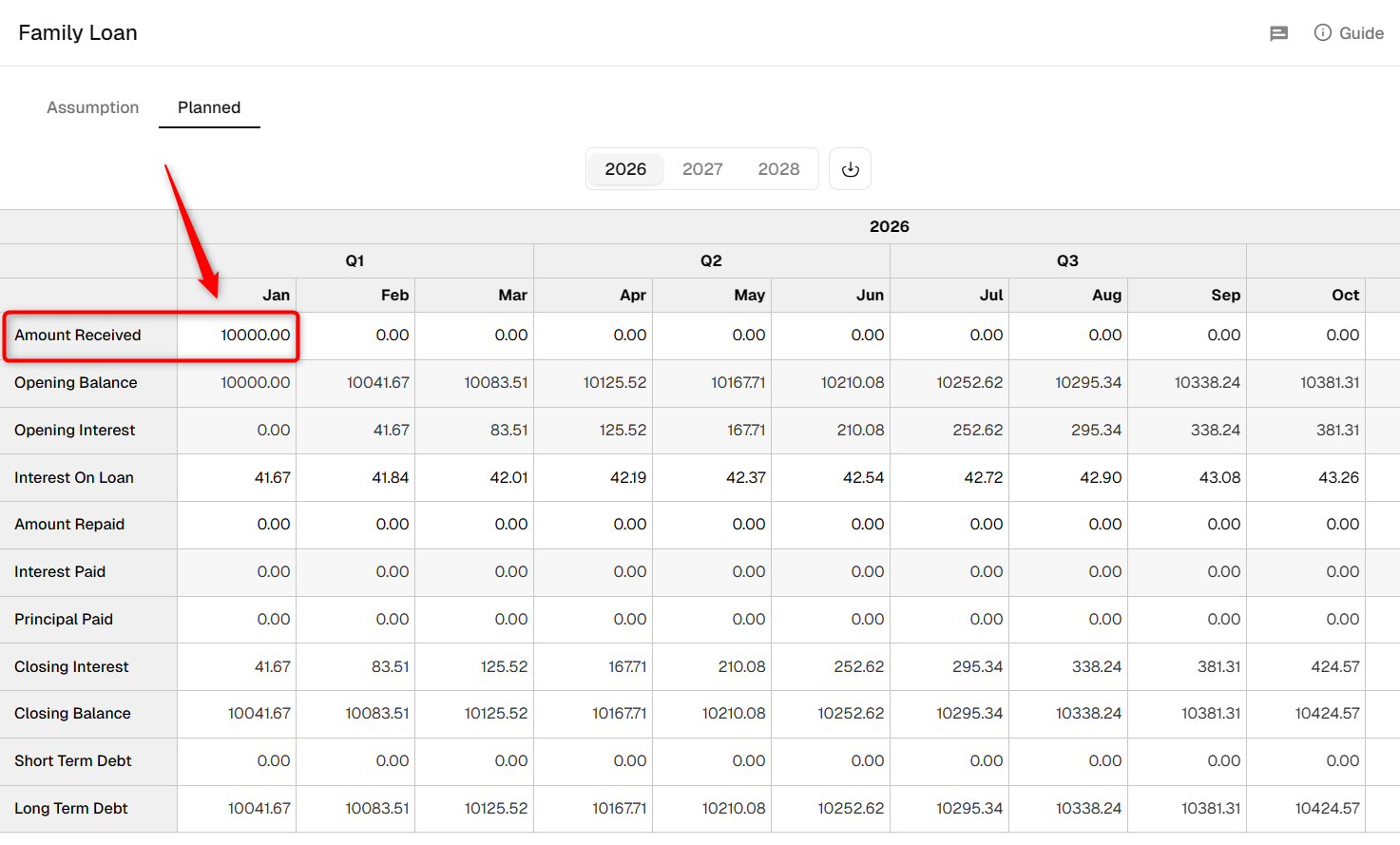
Amount Received: Enter the amount of money you expect to receive and when you expect to receive it.
You can enter the full amount in one month or enter amounts across multiple months, depending on how the funding is structured. Upmetrics will use your assumptions to calculate the applicable interest and loan values.
- 8
-
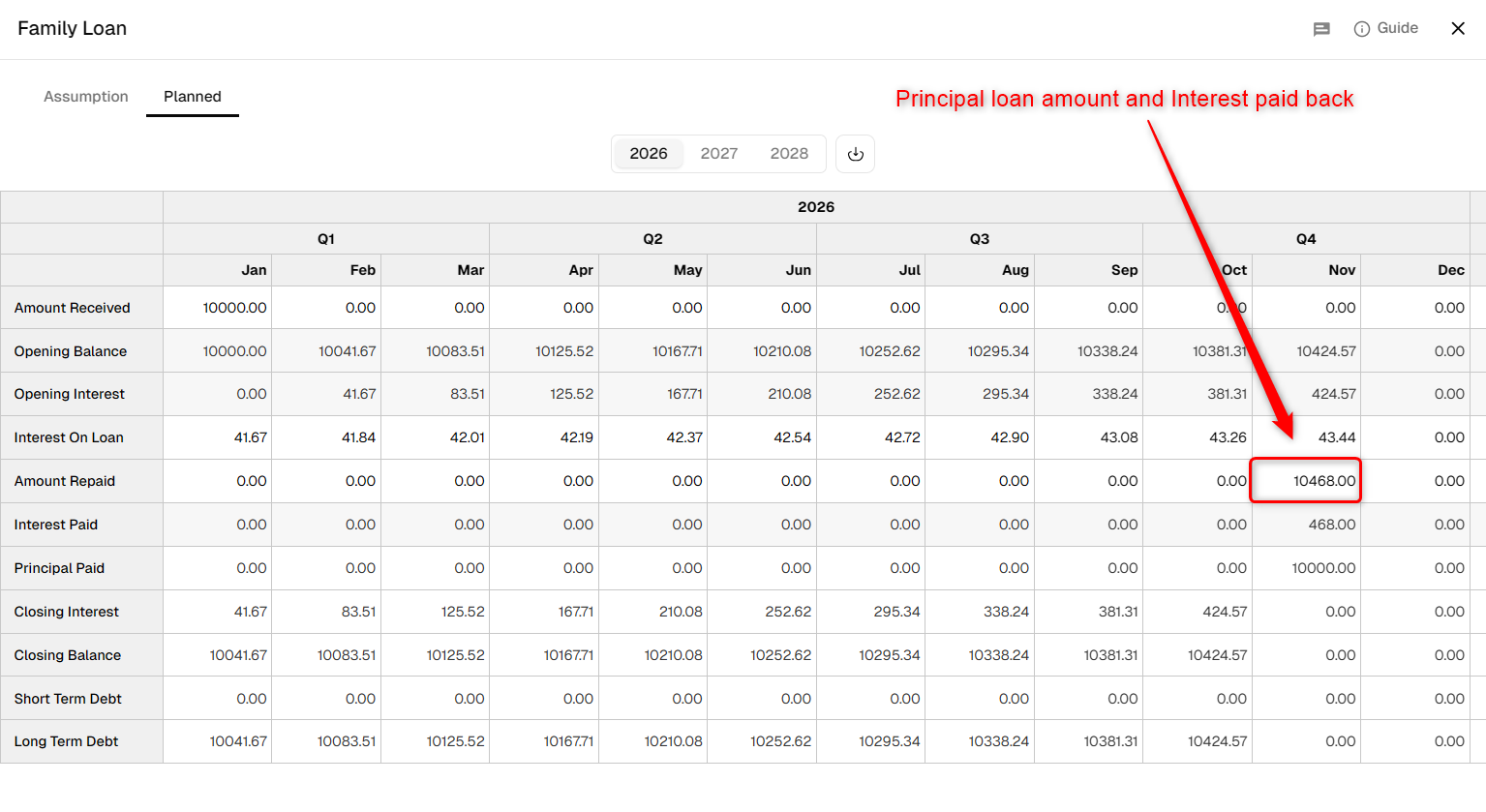
Amount Repaid: Enter the amount you plan to repay against the outstanding loan balance.
Locate the month in which you expect the convertible loan to convert into equity. In that month, enter the outstanding principal plus applicable interest as the amount being repaid.
NOTE: If you are unsure about the repayment or conversion amount, consult your lender, investor, or financial advisor.
- 9
-
Review the loan assumptions and save your changes. You can then proceed with the second funding entry to represent the conversion to equity.
Entering the Conversion to Equity
After entering the initial loan, create a second funding entry to represent the amount converting from debt into investor equity.
- 1
-
From the Funding section, create another funding source for the equity conversion using the same funding setup process described above.
If you are creating it manually, add a new funding source and enter a name that clearly identifies the conversion, such as Convertible Loan - Equity Conversion.
- 2
-
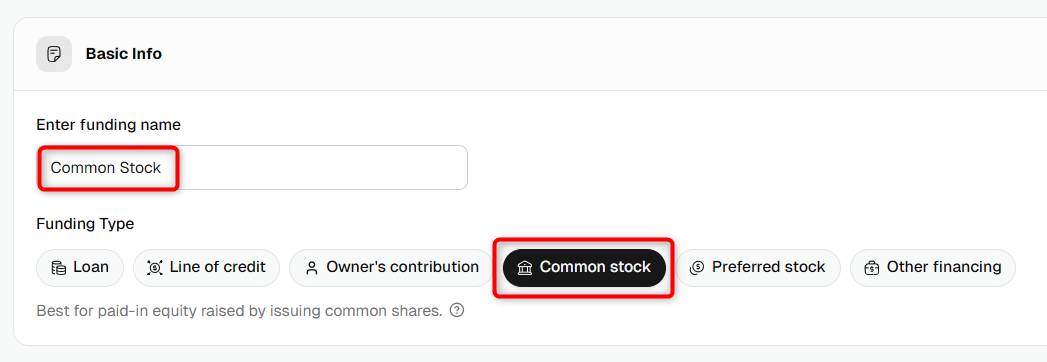
When the assumption form opens, select the funding type as Investment, such as an owner's contribution, common stock, or preferred stock.
- 3
-
Toggle the option if this investment existed before the plan started.
Enter the full amount of the original loan plus the applicable interest. Use the same month in which you recorded the convertible loan as being repaid in full.
Save the funding entry when finished.