
AI-Driven forecasting with Upmetrics
Financial forecasting can feel challenging when you are unsure which revenue streams, expenses, direct costs, or personnel roles to include in your plan.
Finance AI makes this process easier by helping you turn a simple description of your business into a starting financial forecast. Instead of creating every forecast item from scratch, you can describe your business, review the suggestions generated by Finance AI, and add the relevant items to your forecast.
Finance AI can help you create starting assumptions for Revenue, Expenses, Cost of Sales, and Personnel. You can review and edit all suggested items before adding them to your forecast.
In this article
How does Finance AI help you plan better?
You may already have a general idea of how your business will make money and what it will cost to operate. The challenge is turning those ideas into structured financial assumptions.
Finance AI helps you get started by:
- Turning a plain-language description of your business into suggested forecast items.
- Suggesting relevant revenue streams, expenses, Cost of Sales items, and personnel roles.
- Providing initial assumptions that you can review and customize based on your business expectations.
- Reducing the time required to build the first version of your financial forecast.
NOTE: Finance AI provides a starting point for your forecast. Always review the suggested amounts, growth assumptions, timing, employee counts, and other details before adding them to your plan.
How does AI-powered forecasting work?
Finance AI is available directly inside the applicable sections of the Finance Forecasting module.
The process is simple: describe your business or the financial items you want to forecast, let Finance AI draft the relevant items, review the suggestions, and add the items you want to use.
You remain in control of the forecast. Before adding any AI-generated item, you can review its assumptions and use the Edit option to make changes.
Creating Revenue with Finance AI
- 1
-
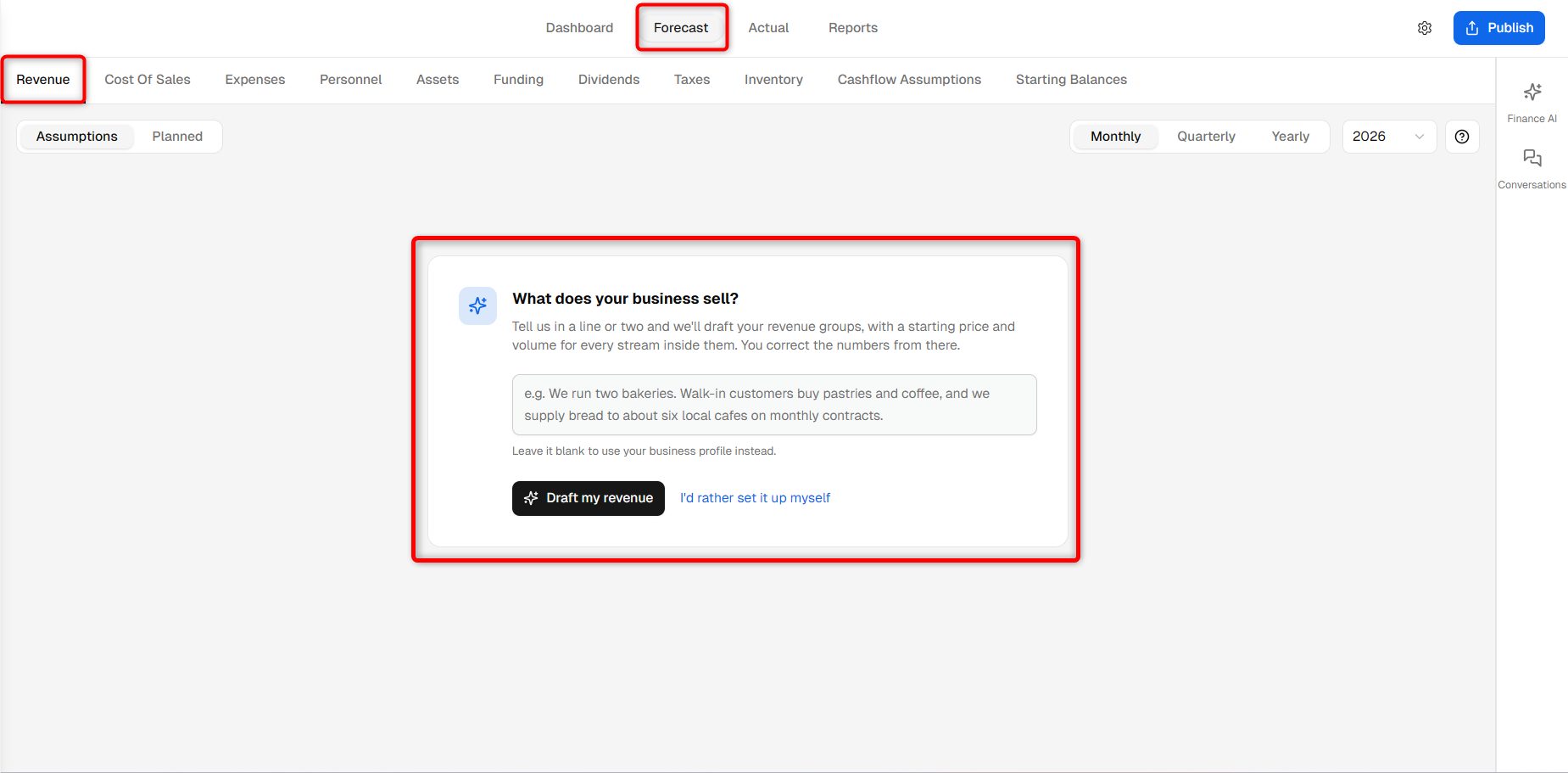
Go to the Finance Forecasting module, select the Forecast tab, and open the Revenue section.
You will see a guided setup asking What does your business sell?
- 2
-
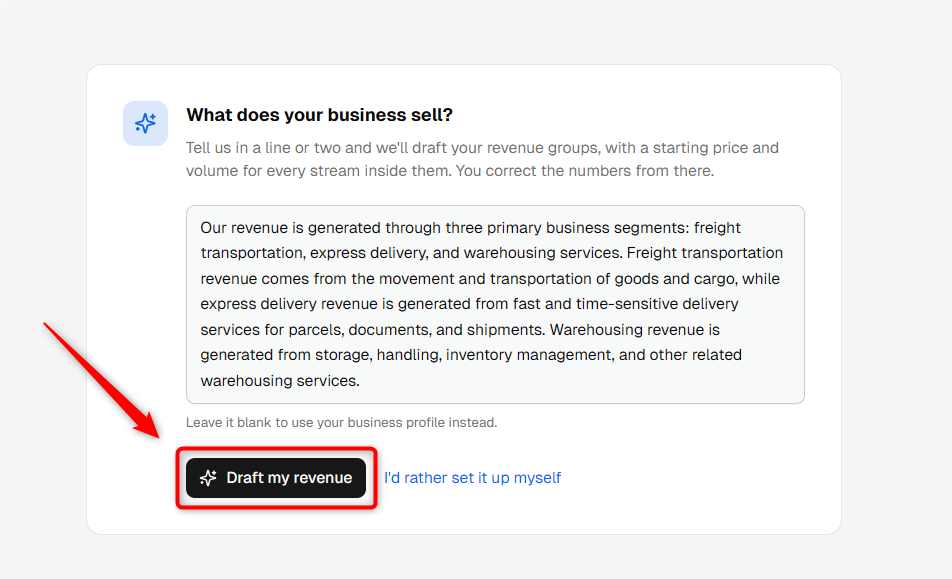
Describe your products, services, and the different ways your business generates revenue.
Include useful details such as pricing, expected sales volume, customer count, billing frequency, or other information relevant to your business model.
When you are ready, click Draft my revenue.
- 3
-
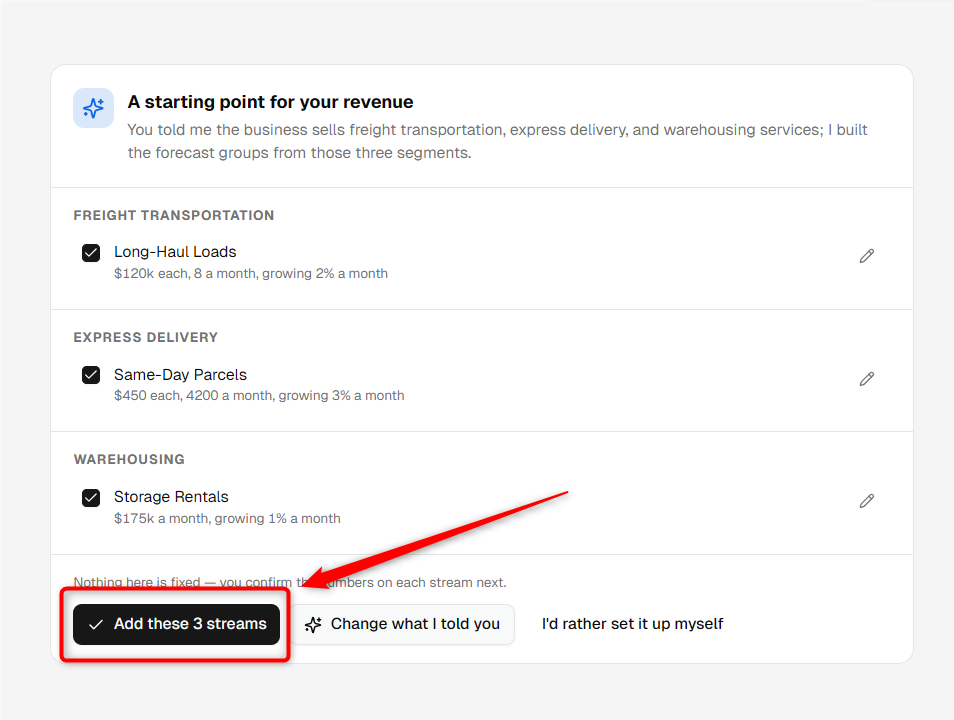
Finance AI will suggest revenue groups and revenue streams based on your description.
Review the proposed stream names, pricing, sales volume, growth assumptions, and other details. Click the Edit icon beside a stream if you need to make changes.
Keep the required streams selected and click Add these streams.
- 4
-
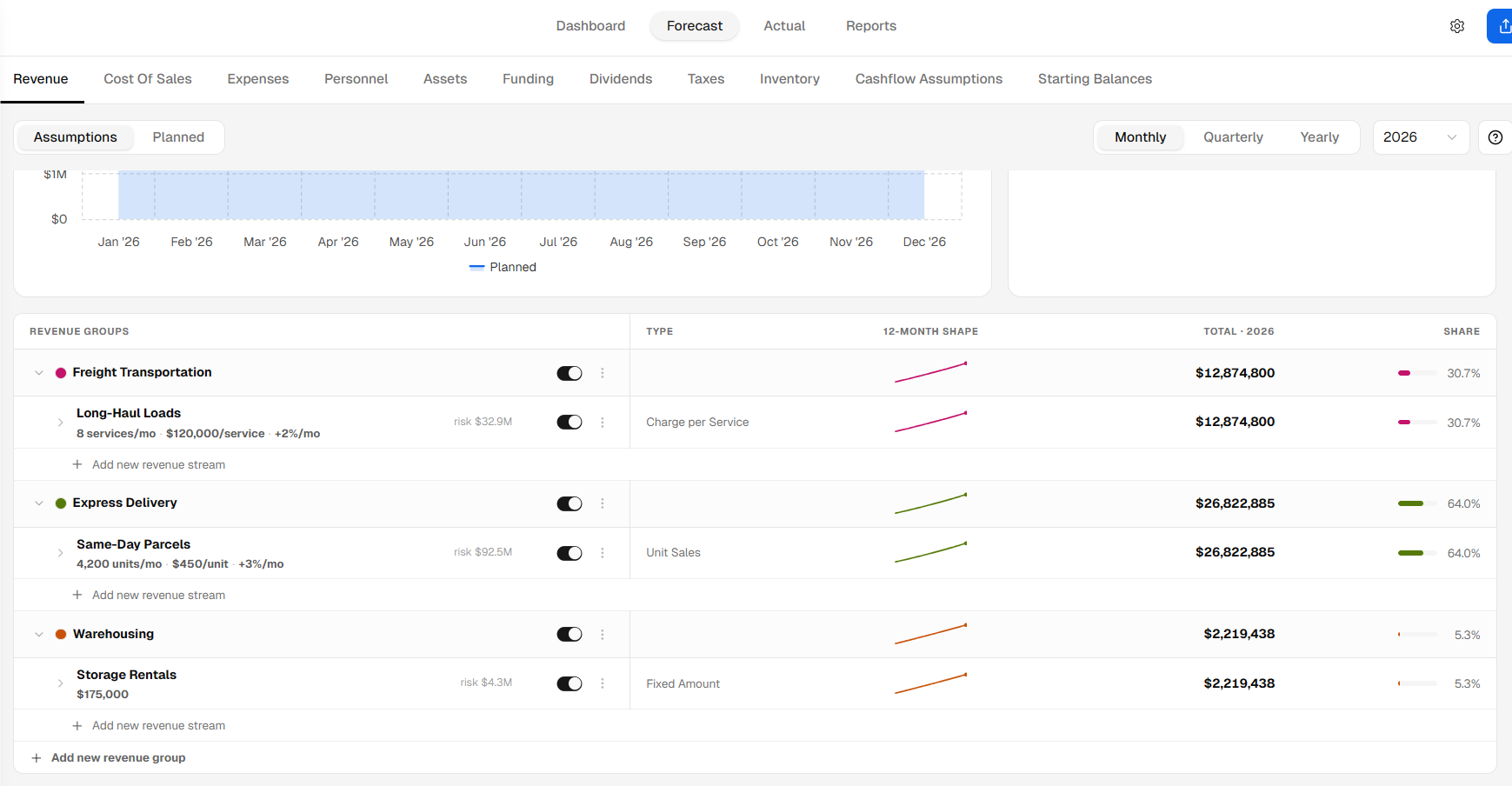
The selected revenue streams will be added to your forecast.
You can open any revenue stream later to review or update its assumptions.
Creating Expenses with Finance AI
- 1
-
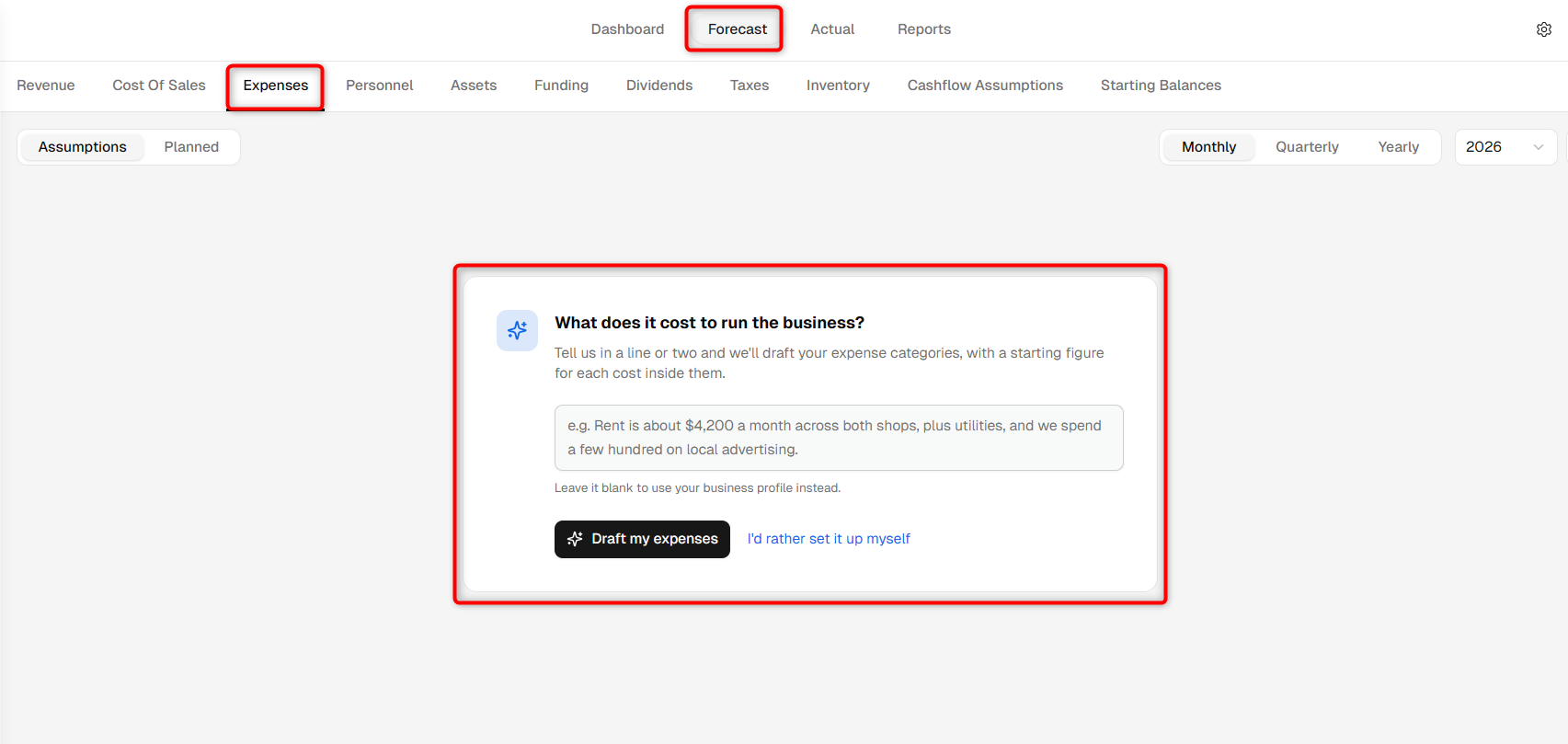
Open the Expenses section under the Forecast tab.
The guided setup allows you to describe the costs required to operate your business.
- 2
-
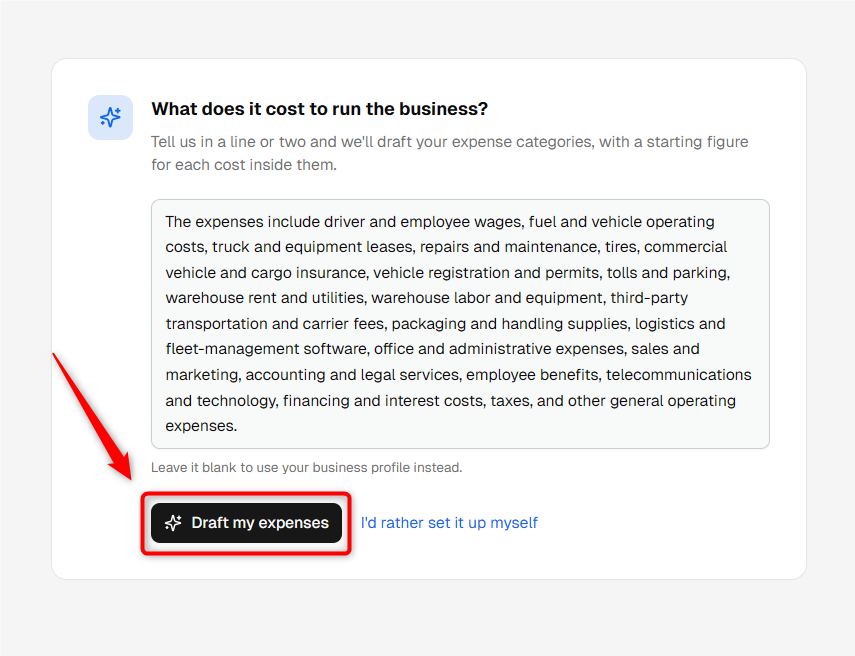
Enter a description of your expected operating expenses. You can mention items such as rent, utilities, insurance, software, marketing, professional services, and other recurring or one-time business costs.
Click Draft my expenses to generate suggestions.
- 3
-
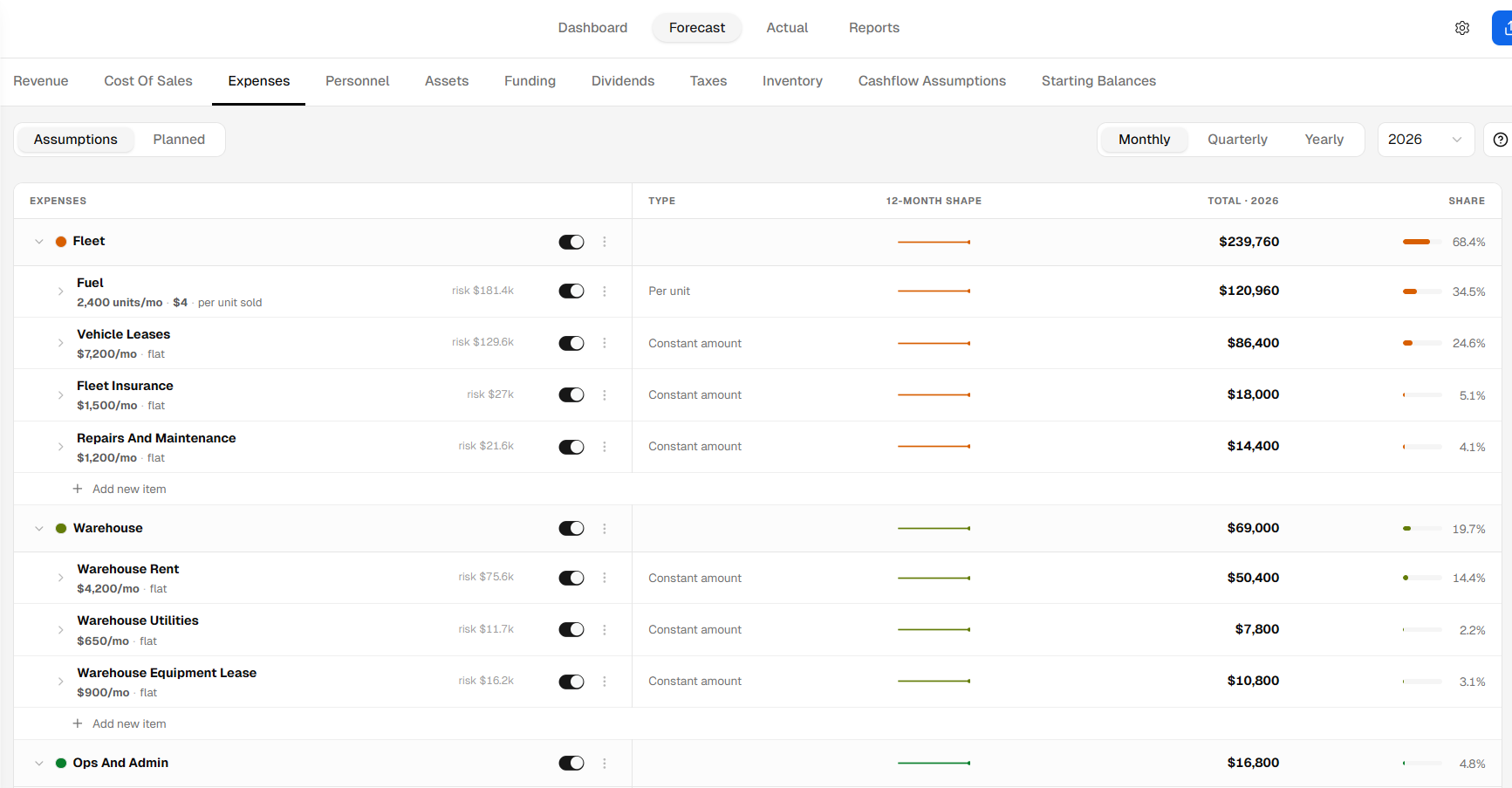
Finance AI will suggest expense groups and individual expense items based on your business description.
Review the expense names, amounts, frequency, and other assumptions. Edit any suggestion that does not match your expectations before adding it to the forecast.
- 4
-
Add the required expenses to your forecast.
After they are added, you can return to the Expenses section at any time to review or update their assumptions.
Creating Cost of Sales with Finance AI
- 1
-
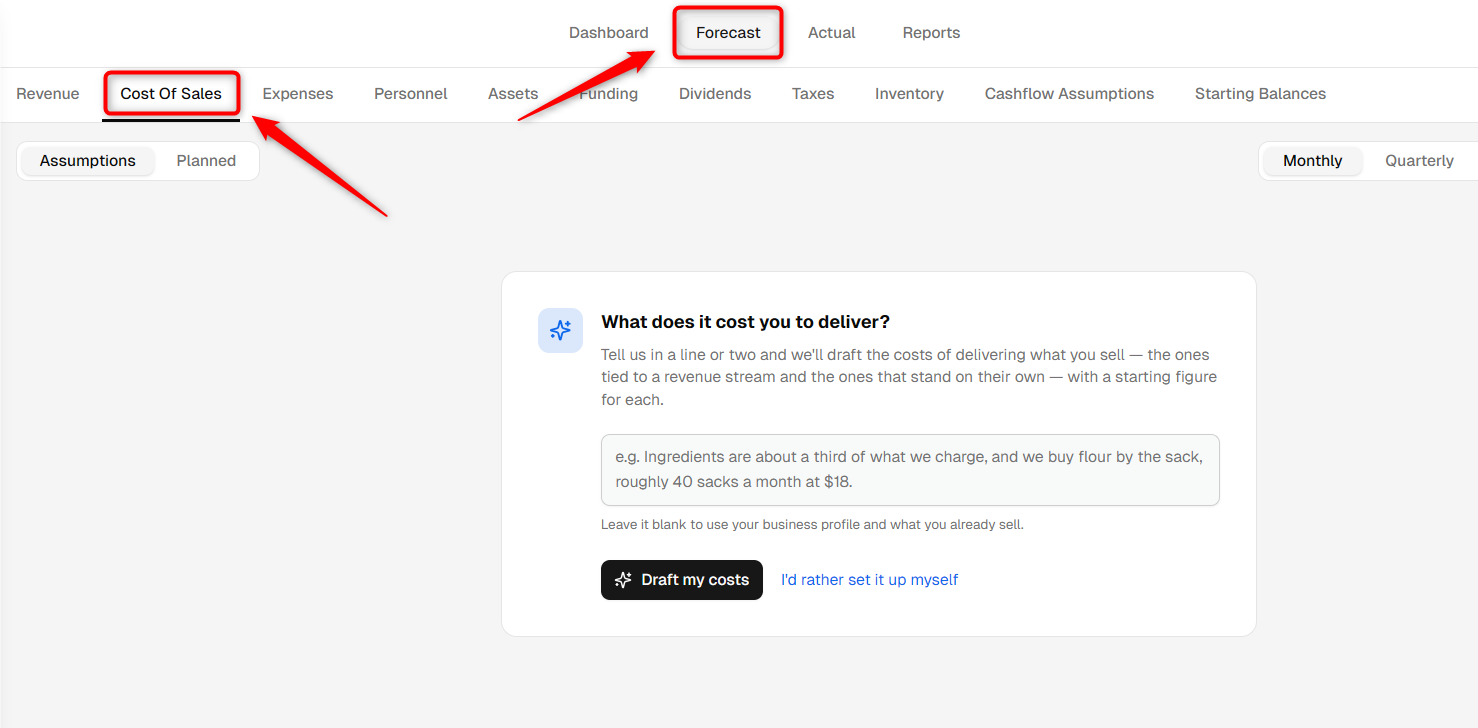
Open the Cost of Sales section under the Forecast tab.
Use the guided setup to describe the direct costs involved in producing or delivering your products and services.
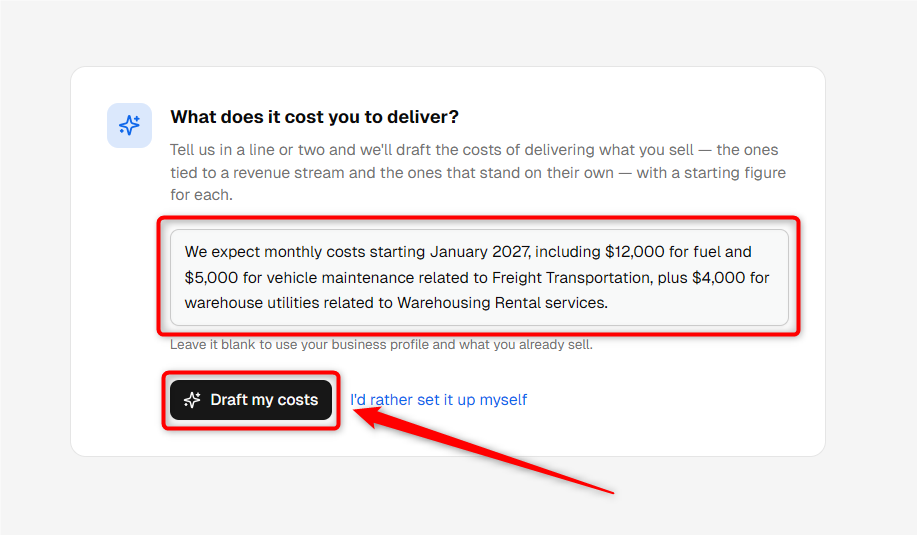
- 2
-
Describe the direct costs your business expects to incur. These may include raw materials, packaging, production supplies, direct service costs, or other expenses directly associated with sales.
If a cost relates to a specific revenue stream, mention that relationship in your description.
Use Finance AI to draft your Cost of Sales forecast.
- 3
-
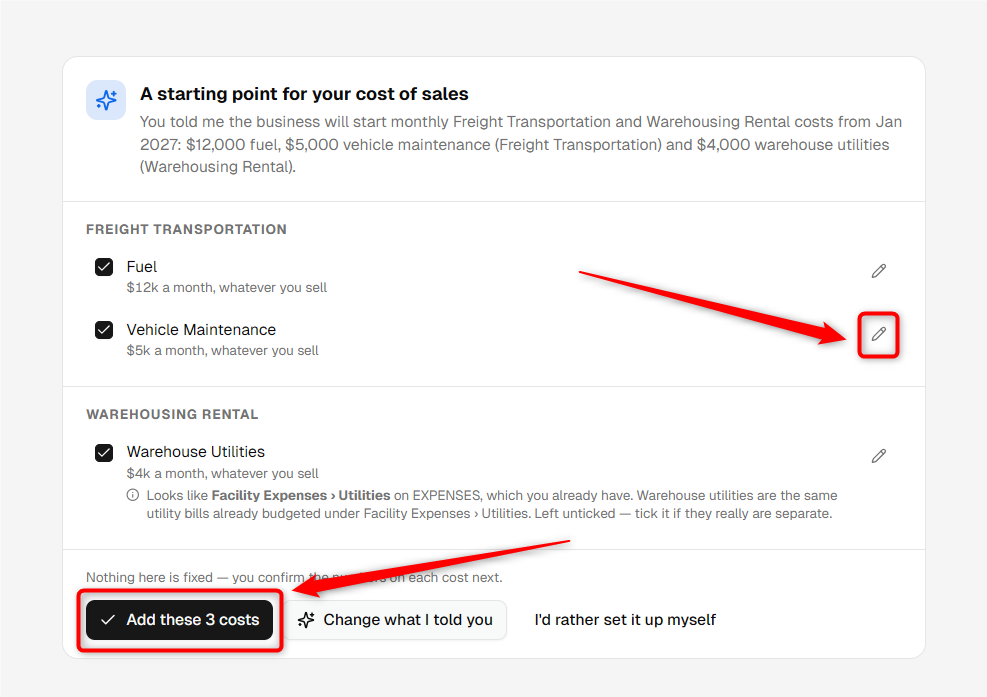
Review the suggested Cost of Sales groups and items.
Check the forecasting method, amounts, and any relationships with your revenue streams. Use the Edit option if you need to adjust a suggestion.
- 4
-
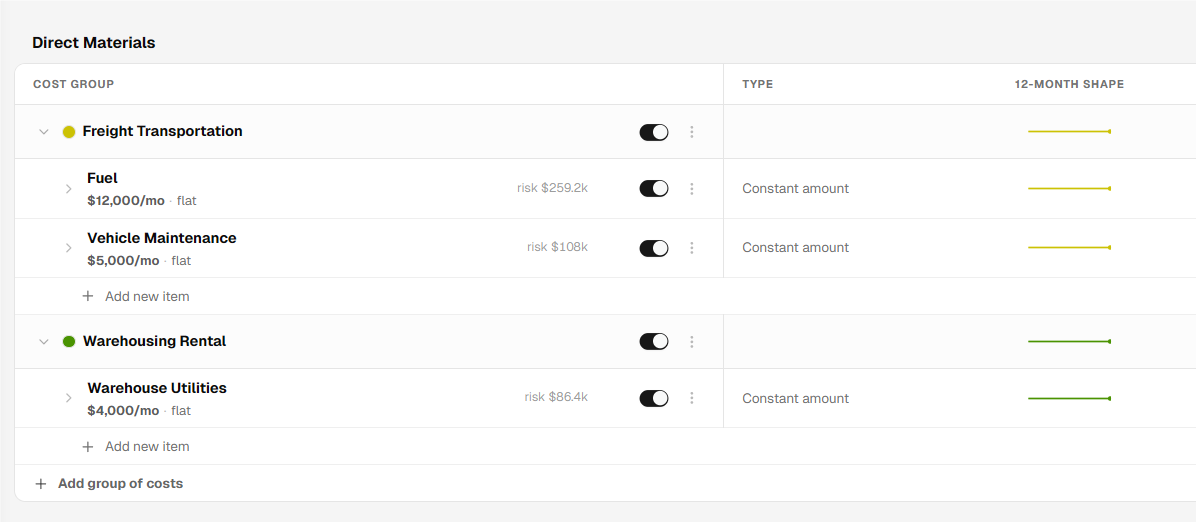
Add the required Cost of Sales items to your forecast.
You can review and update these costs later as your pricing, production, or sales assumptions change.
Creating Personnel with Finance AI
- 1
-
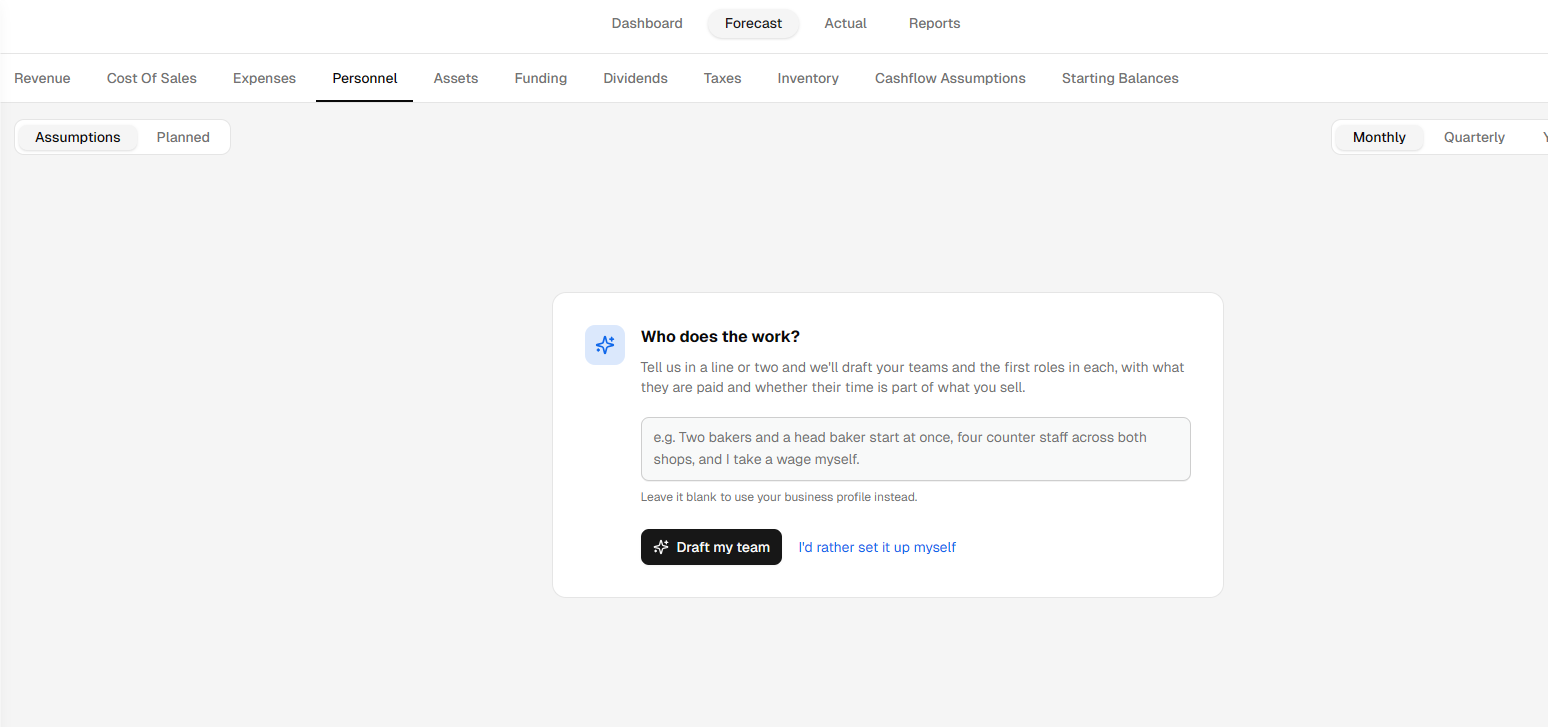
Open the Personnel section under the Forecast tab.
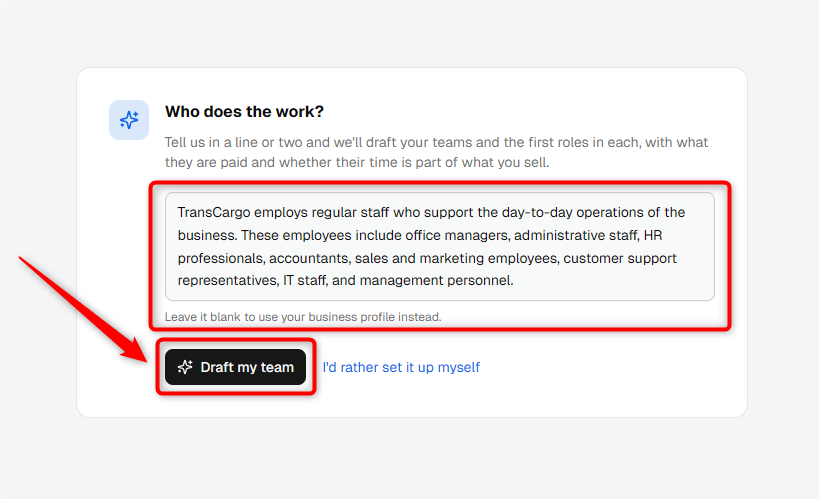
You will see a guided setup asking Who does the work?
- 2
-
Describe the employees or teams your business expects to need.
Include details such as job roles, expected headcount, salaries, benefits, and whether the employees should be treated as direct or indirect labor.
Click Draft my team.
- 3
-
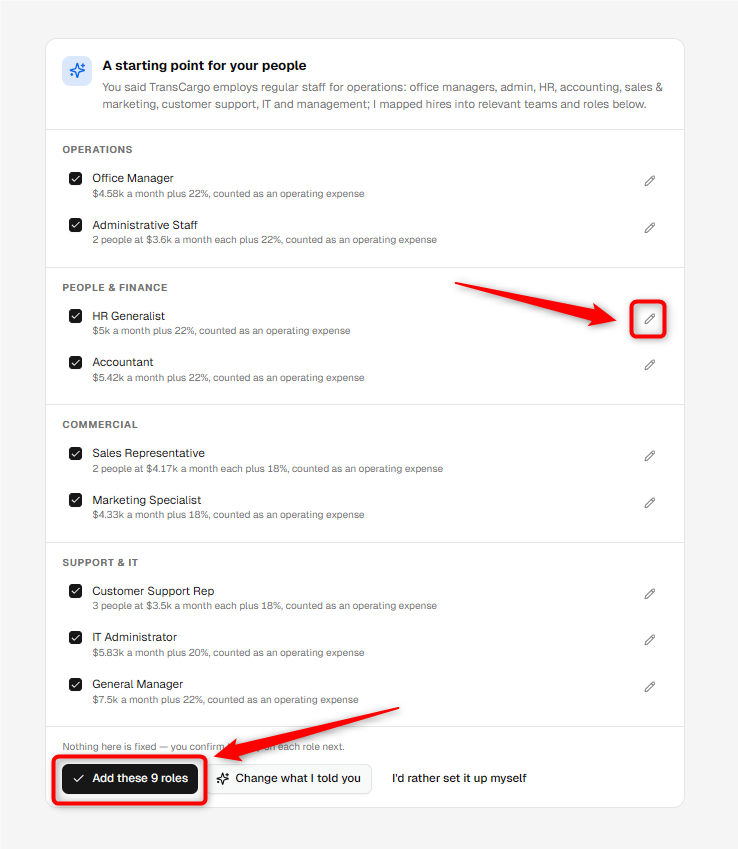
Finance AI will suggest teams and personnel roles based on the information you entered.
Review the job titles, employee counts, salaries, benefits, and labor classifications. Use the Edit option if any assumptions need to be changed.
Once the suggestions look correct, keep the required roles selected and click Add these roles.
- 4
-
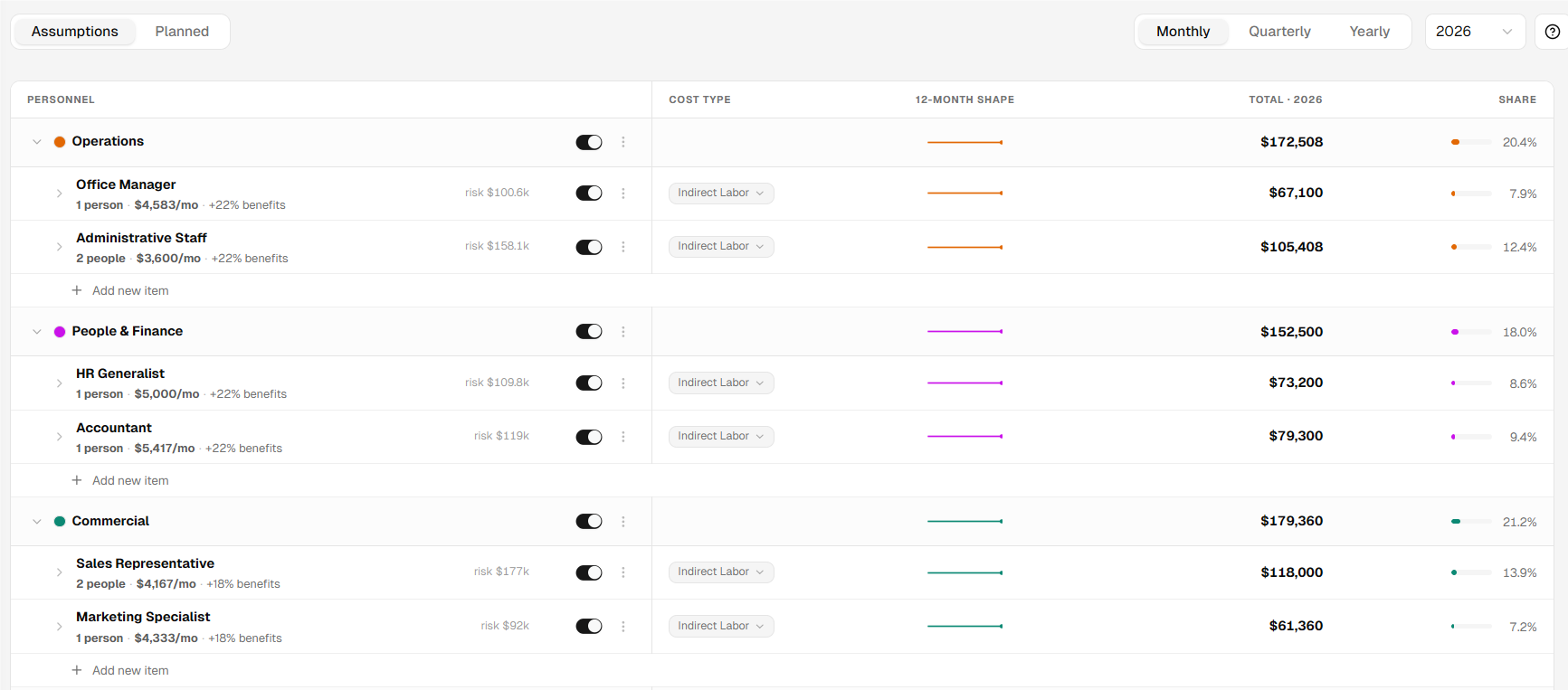
The selected teams and personnel roles will be added to your forecast.
From the Personnel section, you can review and update headcount, salaries, benefits, employment dates, and labor classifications whenever required.
TIP: The more useful context you provide about your business, pricing, costs, and team, the better the starting suggestions Finance AI can generate.
NOTE: If you prefer not to use Finance AI, each forecast section also provides an I'd rather set it up myself option so you can create your groups and items manually.
Build your forecast faster with Finance AI
Finance AI helps you move from a business description to a structured financial forecast without having to identify every revenue stream, expense, direct cost, or personnel role from scratch.
After Finance AI generates the initial suggestions, review them carefully and adjust the assumptions to reflect your actual business plans. You can return to any forecast item later and update it as your expectations change.
Using Finance AI as a starting point can help you build your forecast faster while still keeping full control over the financial assumptions used in your business plan.